
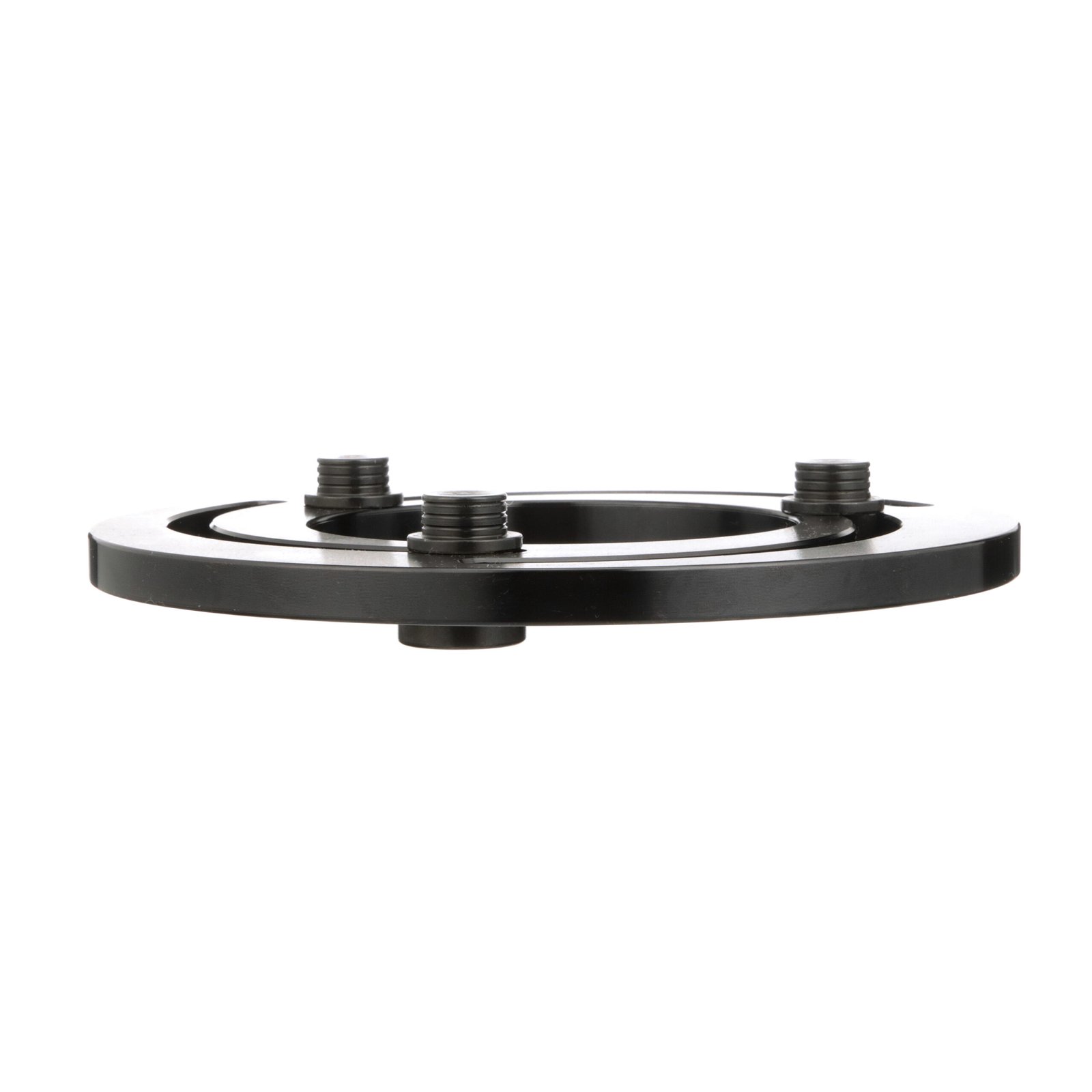
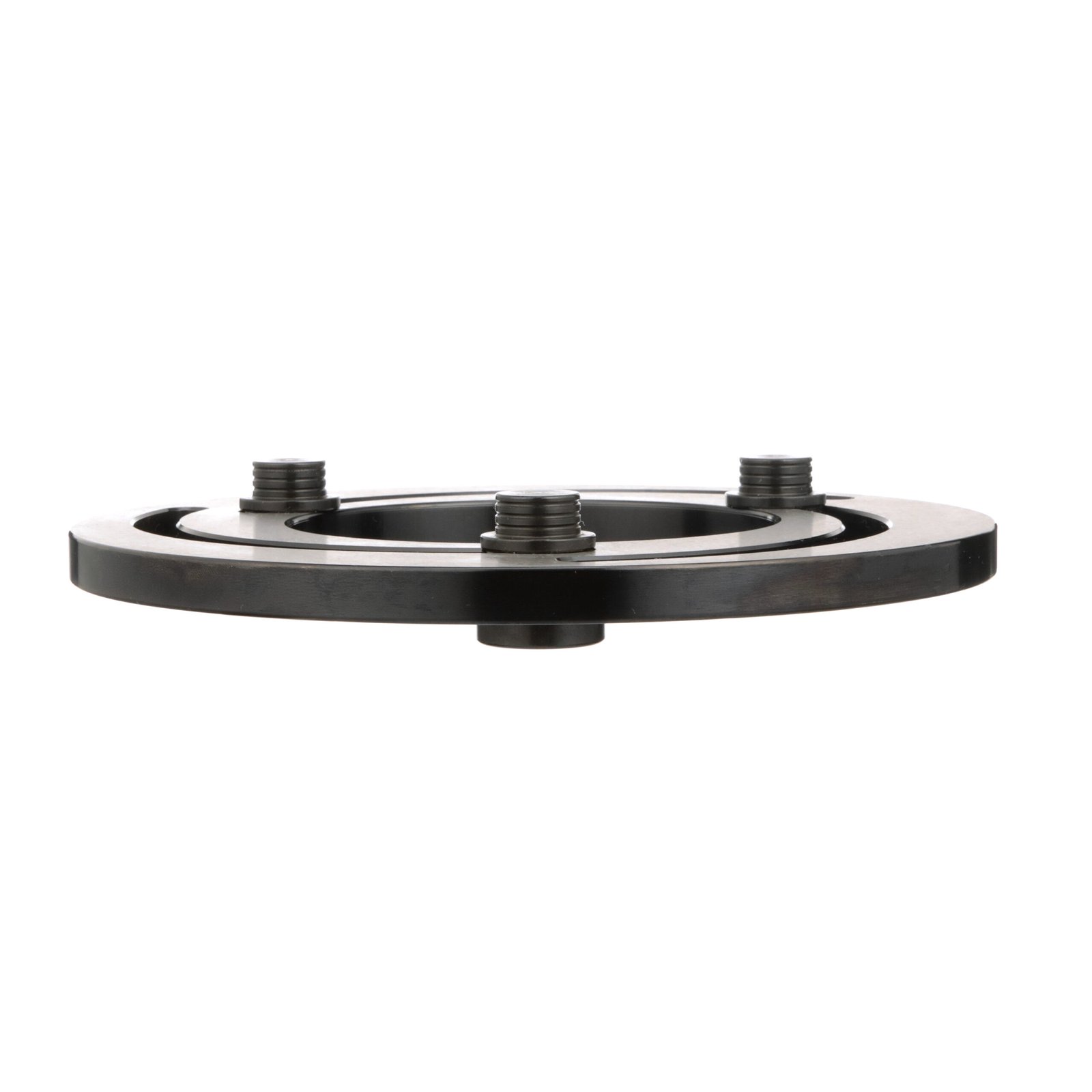
Taiki 6″ Jaw Boring Ring for Compact CNC Lathe Chucks
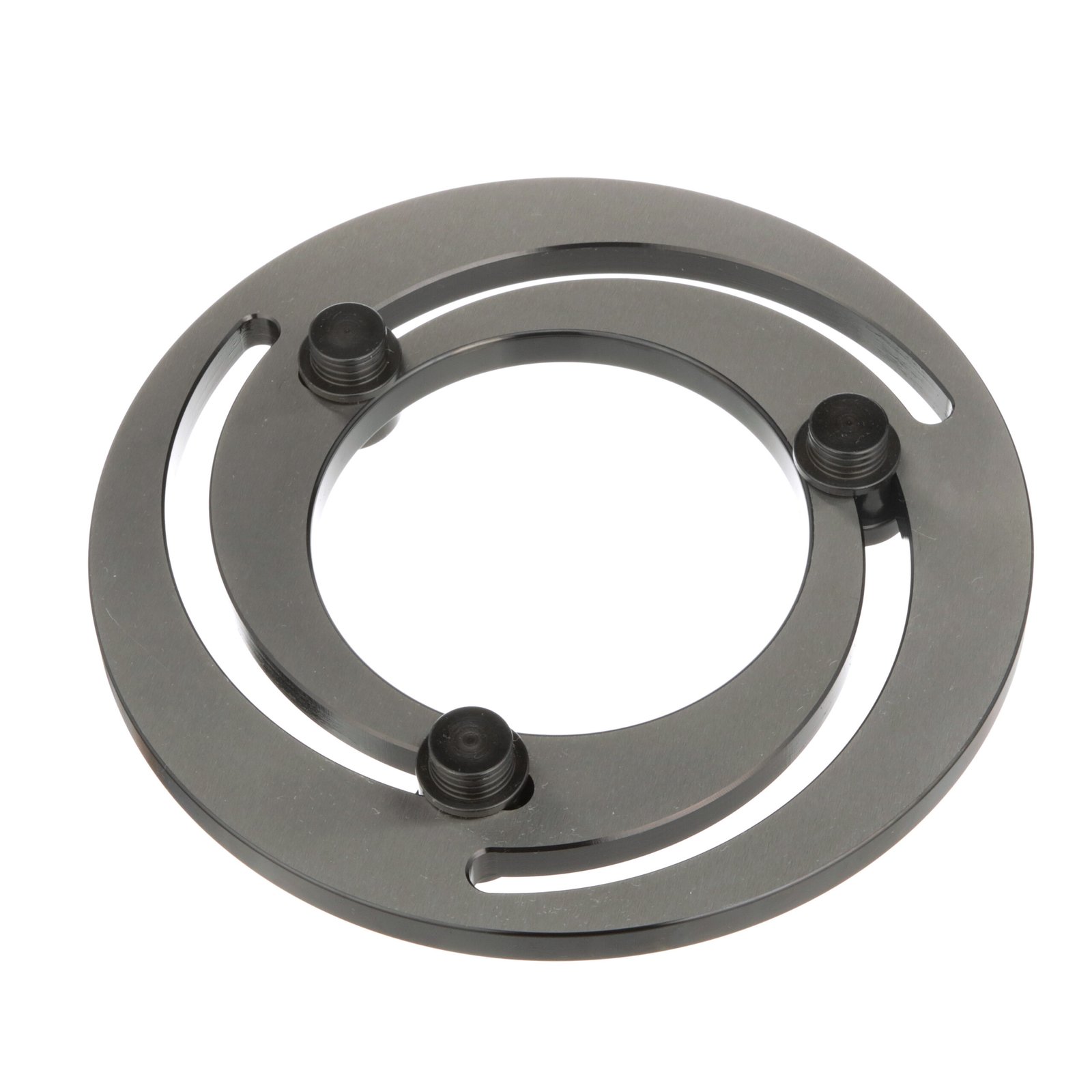
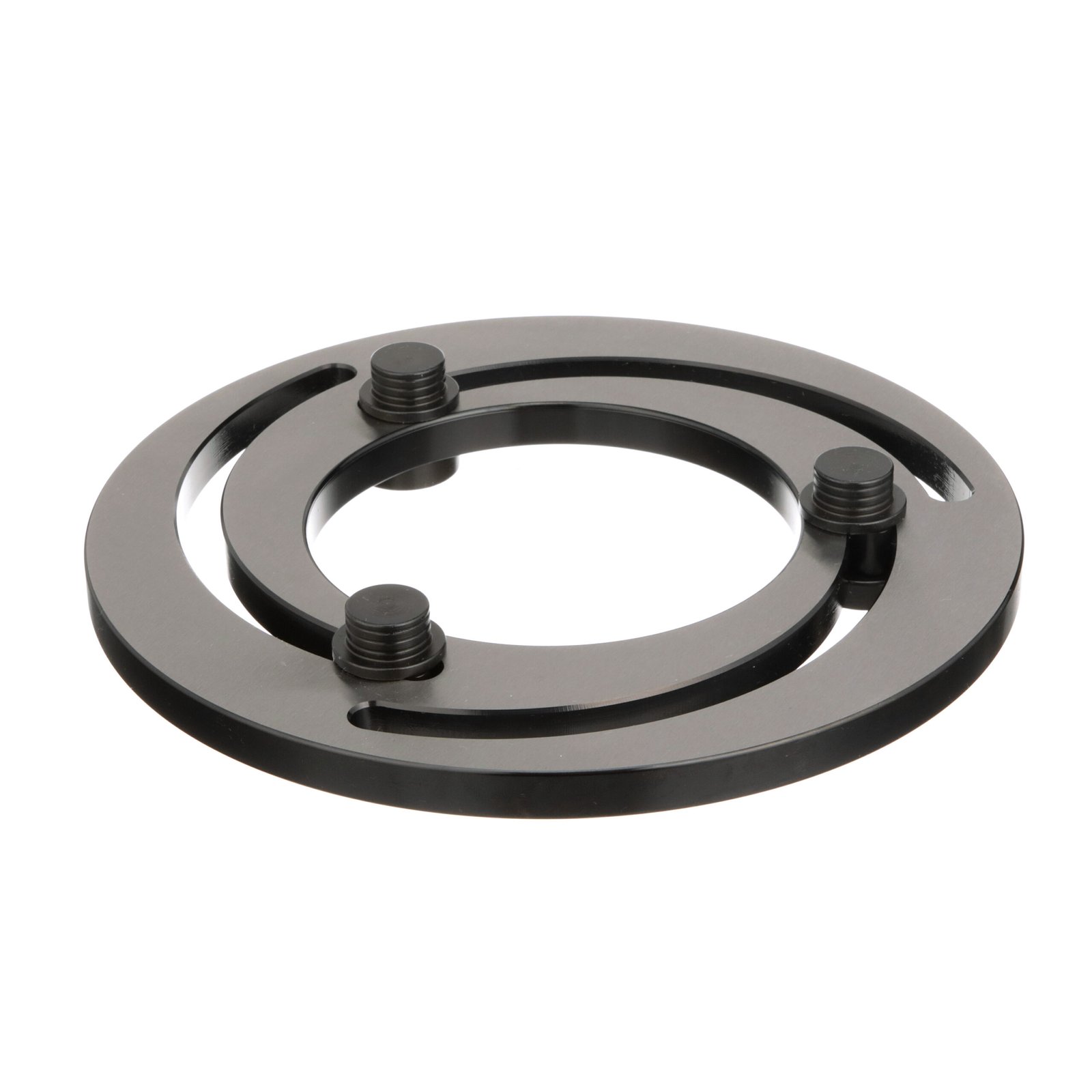
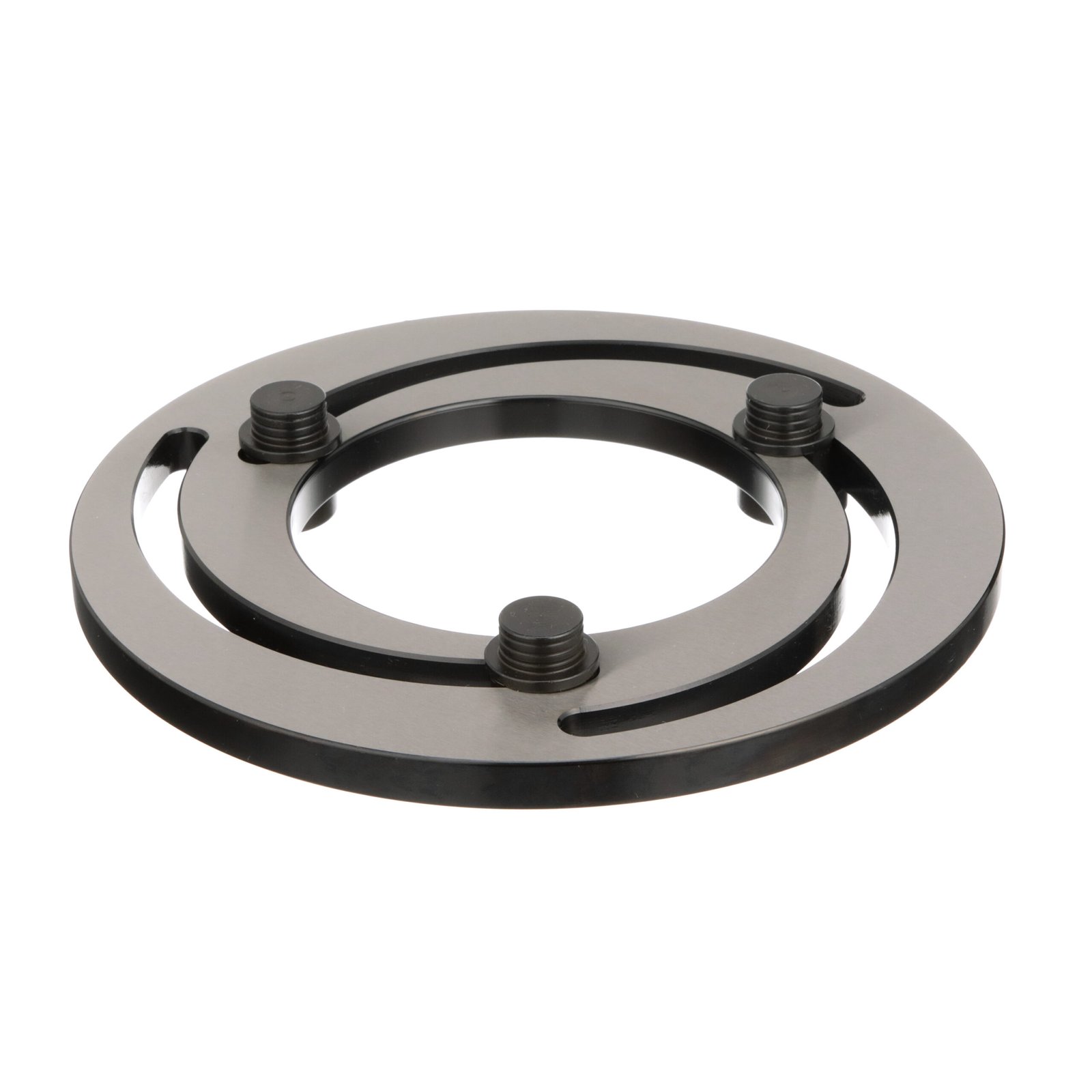
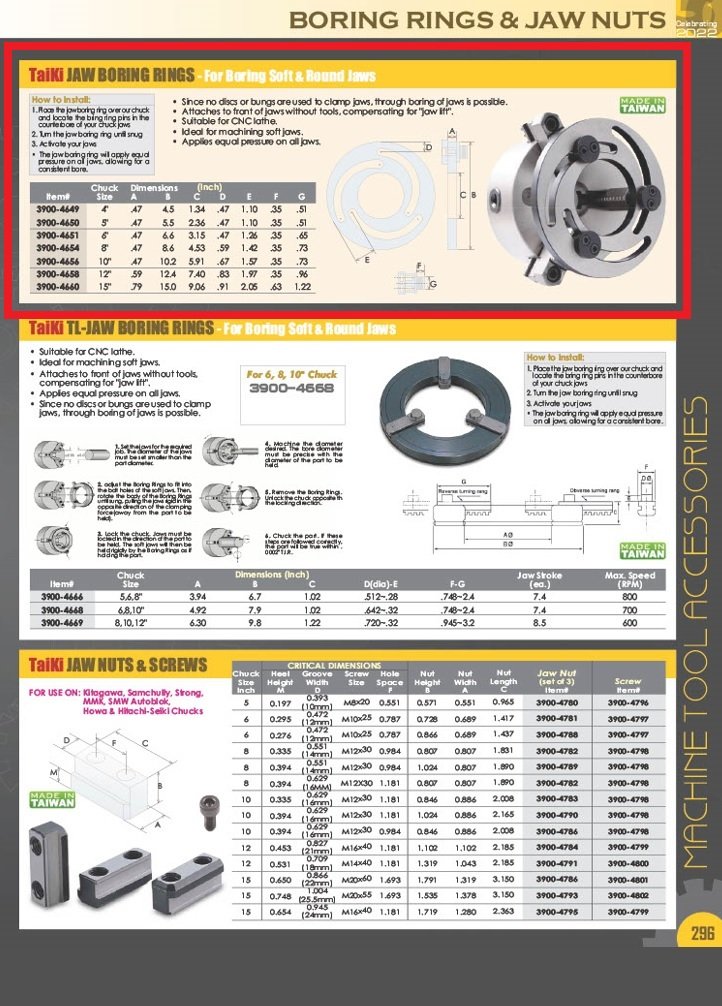
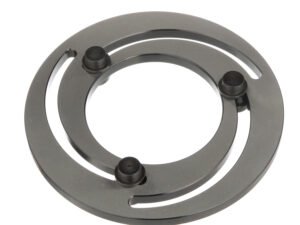
The Taiki 6-inch jaw boring ring is a reusable soft-jaw setup tool for compatible CNC lathe chucks. It preloads the jaws from the front while leaving the center open for boring the complete gripping profile.
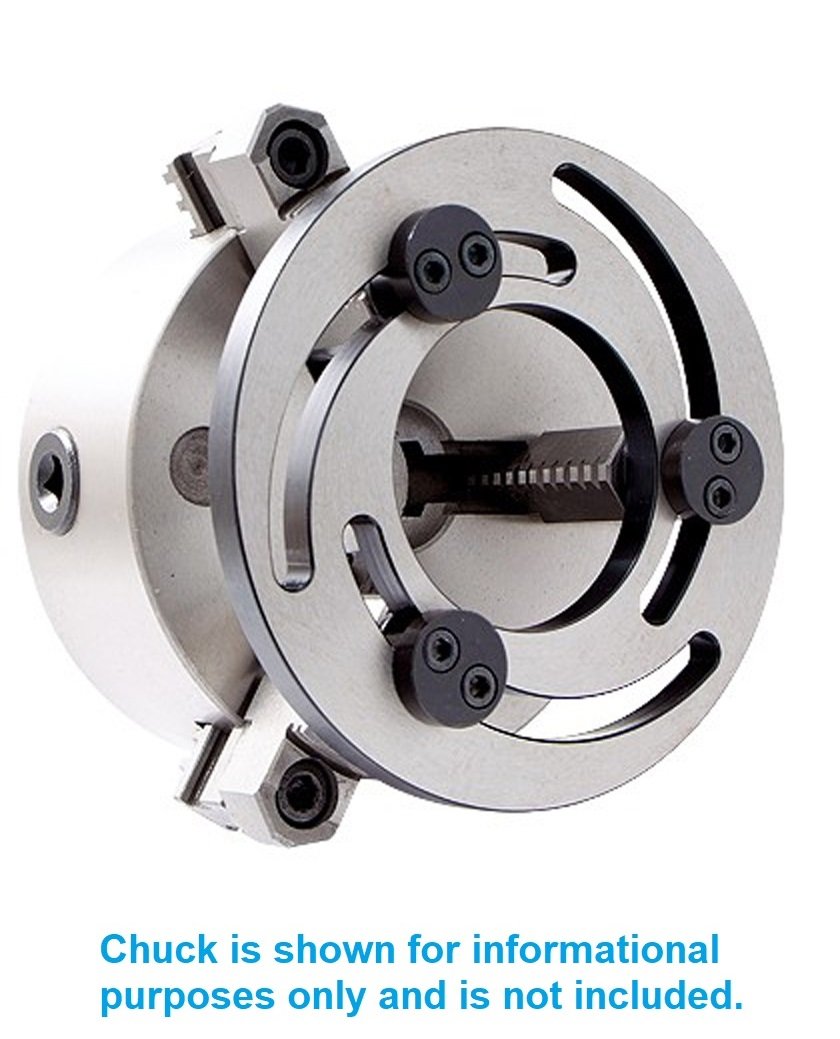
The ring’s adjustable contacts engage the counterbores in the soft jaws. Once positioned and loaded, the system applies balanced pressure across the jaw set and helps compensate for normal jaw lift during machining.
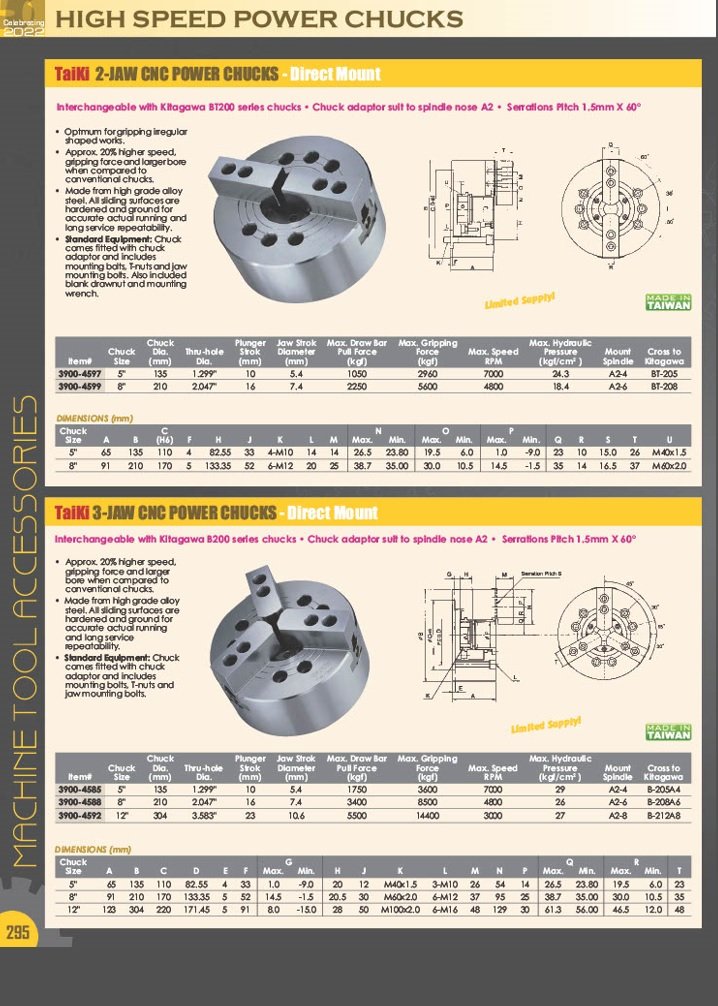
Its compact size makes this model particularly relevant to 6-inch power chucks used on smaller CNC turning centers, gang-tool lathes and compatible main- or sub-spindle setups.
A Dedicated Setup Tool for 6″ Chucks
Preparing soft jaws often begins with an improvised disc, plug or piece of scrap material. The setup machinist must find a diameter that fits the current jaw position, verify that it loads all jaws and then work around the obstruction while boring.
The Taiki ring provides a dedicated alternative for compatible 6-inch chucks:
- Attaches to the front of the soft jaws
- Requires no separate installation tools
- Applies pressure across the complete jaw set
- Helps account for normal jaw lift
- Leaves the center open for the boring tool
- Can be reused for multiple soft-jaw setups
How Do You Bore Soft Jaws on a 6″ CNC Chuck?
Soft jaws should be machined while the chuck mechanism is loaded in a condition that represents the final workholding operation. If the jaws are bored without preload, they may occupy a different mechanical position when the actual component is clamped.
The Taiki ring creates a controlled preload through the jaw fronts. The operator can then bore the soft jaws close to the required gripping diameter while the chuck mechanism remains loaded.
After the ring is removed and the workpiece is clamped, the machined jaw profile is better positioned to provide consistent contact—assuming the preload direction, chuck pressure and machining method represent the actual production setup.
Open Center for Complete Through-Boring
A preload disc or bung gripped inside the jaws can obstruct the boring bar. This may prevent the operator from machining through the complete jaw width or creating the required rear clearance.
The Taiki ring loads the jaws from their front counterbores, leaving the central area unobstructed. This permits through-boring when the jaw geometry and cutting tool allow it.
Open-center access is useful for:
- Deep gripping diameters
- Jaw profiles that extend through the full width
- Second-operation jaws with a locating step
- Clearance behind the primary gripping surface
- Longer boring tools requiring an unobstructed path
Compensates for Jaw Lift During Machining
Jaw lift is the small tilting or upward movement that can occur at the jaw front as the chuck applies force. If the soft jaws are machined in a different position from the one used during production, the finished profile may not seat the component as expected.
The front-loading design helps account for normal jaw movement during boring. This can support more consistent workpiece seating and gripping contact.
The ring cannot correct:
- Excessively worn master jaws
- Damaged chuck guides
- Contaminated serrations or mounting surfaces
- Incorrectly tightened top jaws
- Spindle or chuck-body runout
- A damaged hydraulic or mechanical chuck mechanism
Balanced Preload Across the Jaw Set
The adjustable ring contacts are positioned in the soft-jaw counterbores. When properly adjusted, the ring distributes preload across the jaw set instead of relying on an improvised component with uncertain contact.
Balanced loading helps reduce the risk that one jaw is positioned differently from the others while the gripping profile is being machined.
Useful for Compact Turning Centers
A 6-inch power chuck is commonly selected where spindle speed, machine footprint and access around smaller components are priorities. This dedicated ring supports the same compact-workholding strategy.
Potential machine environments include:
- Compact CNC turning centers
- Gang-tool CNC lathes
- Swiss-type secondary-operation equipment with compatible chucking
- Main spindles equipped with a 6″ chuck
- Subspindles using a compatible 6″ three-jaw chuck
- Toolroom and prototype CNC lathes
Actual compatibility depends on the chuck model, jaw design, counterbore geometry and available machine clearance.
Faster Changeovers for Short Production Runs
On a short-run job, jaw preparation may consume more time than machining the first component. A dedicated boring ring gives the operator a known preload tool instead of requiring a new setup piece for every gripping diameter.
This can be valuable when:
- The machine changes jobs several times per week
- Multiple dedicated jaw sets are stored for repeat orders
- The same part runs in small recurring batches
- Finished components require a second operation
- A shop wants a standardized jaw-boring procedure
Second-Operation and Rechucking Applications
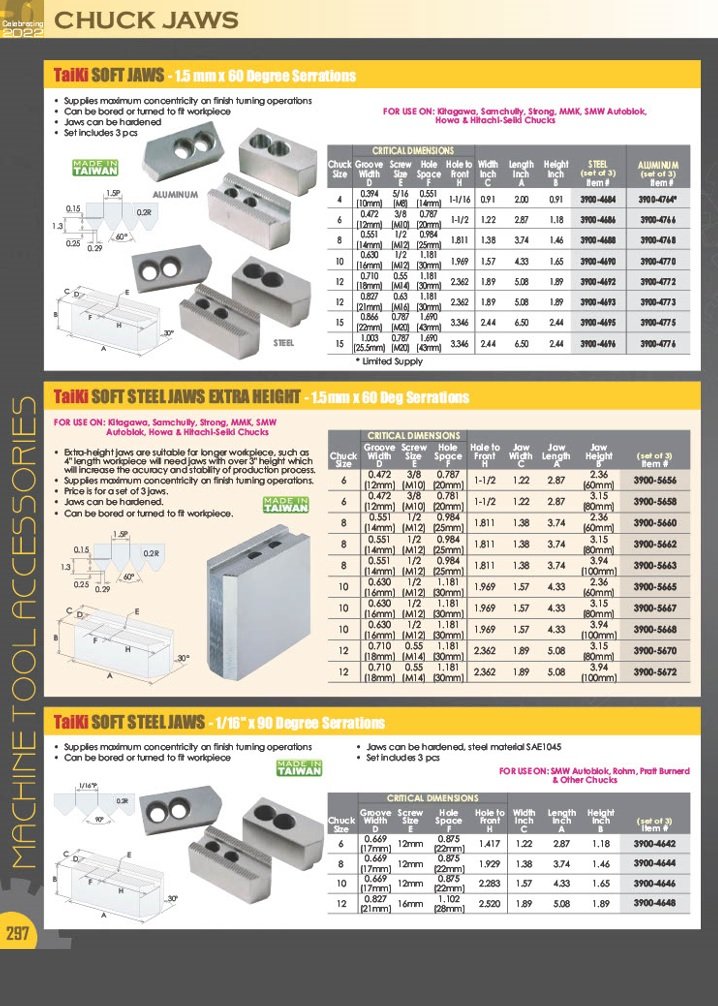
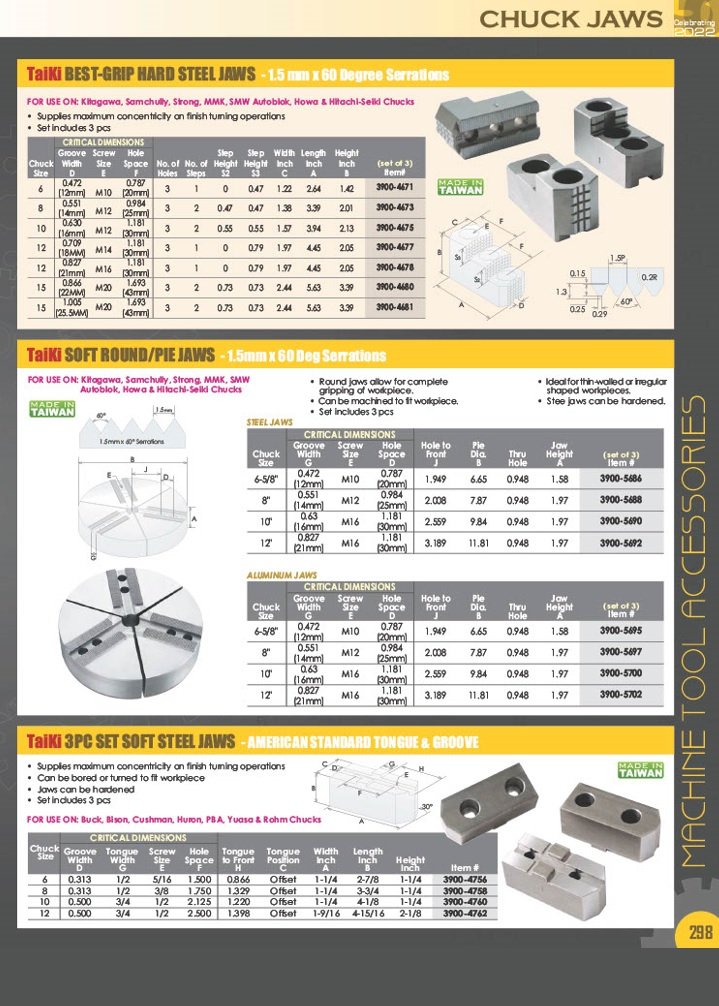
Soft jaws are commonly bored for holding a finished or semi-finished diameter during the second machining operation. A properly prepared profile can increase workpiece contact and provide a controlled axial locating surface.
The 6-inch Taiki ring can support jaw preparation for:
- Small rings and sleeves
- Bushings and collars
- Bearing retainers
- Short flanges
- Hydraulic and pneumatic components
- Small hubs and pulley components
- Precision parts requiring reversal after OP10
Thin-Wall and Delicate Components
Machining the jaws close to the actual workpiece diameter can distribute gripping force over a larger contact area. This may reduce localized pressure and deformation compared with gripping the same component using inappropriate hard jaws.
Clamping pressure must still be selected carefully. Thin-wall parts can deform even in properly bored soft jaws if excessive hydraulic pressure is applied.
Tool-Free Front Installation
The ring does not require separate mounting hardware or installation tools. Its contacts are positioned in the front counterbores of the soft jaws, the ring is adjusted until snug and the chuck is then actuated to apply preload.
Always confirm that every contact is fully seated before spindle rotation begins.
Recommended Installation Procedure
- Place the machine in a safe setup condition.
- Clean the chuck, master jaws, soft jaws and mounting serrations.
- Install the soft jaws in their correct numbered positions.
- Torque the jaw screws according to the chuck manufacturer’s instructions.
- Place the boring ring over the front of the chuck.
- Locate the adjustable contacts in the soft-jaw counterbores.
- Adjust the ring until all contacts are evenly and securely positioned.
- Actuate the chuck to apply the required preload.
- Check boring-bar, jaw, ring and enclosure clearance.
- Machine the required gripping diameter and locating step.
- Stop the spindle completely before releasing the ring.
- Remove the ring, clean the jaws and verify the setup with a test component.
Match the Production Clamping Condition
For better results, the jaw-boring setup should reproduce the production workholding condition as closely as practical:
- Use the same jaw positions.
- Preload the jaws in the intended clamping direction.
- Use representative chuck pressure.
- Bore close to the actual workpiece diameter.
- Use the intended gripping depth.
- Machine the required axial stop during the same setup.
A ring used to preload jaws for external workpiece gripping may not reproduce the force direction required for an internal expansion-gripping setup. Confirm the correct method before machining ID-gripping jaws.
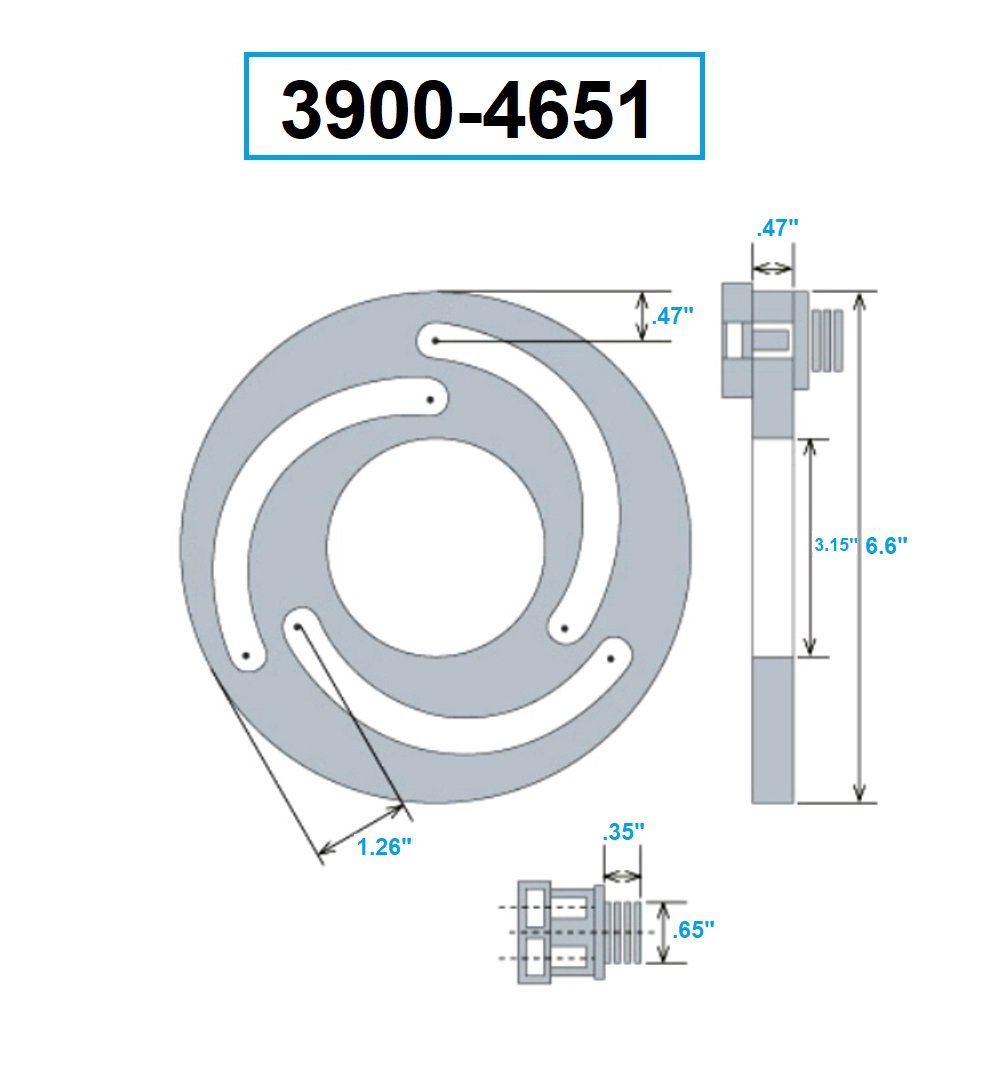
Reference Dimensions
| Drawing Reference | Inch Dimension | Approximate Metric Value |
|---|---|---|
| A | 0.47″ | 12mm |
| B | 6.60″ | 168mm |
| C | 3.15″ | 80mm |
| D | 0.47″ | 12mm |
| E | 1.26″ | 32mm |
| F | 0.35″ | 9mm |
| G | 0.65″ | 16.5mm |
The A–G references correspond to locations on the manufacturer’s dimensional drawing. Use the drawing when comparing these values with the intended chuck and jaw setup.
Technical Specifications
| Brand | Taiki |
|---|---|
| Distributor Reference | 3900-4651 |
| Product Type | JB-type soft jaw boring ring |
| Intended Chuck Size | 6″ |
| Recommended Application | CNC lathe soft-jaw preparation |
| Typical Jaw Arrangement | Compatible 3-jaw chuck setup |
| Attachment Method | Tool-free front-jaw attachment |
| Center Access | Open for through-boring |
| Primary Function | Jaw preload and normal jaw-lift compensation |
| Chuck Included | No |
| Soft Jaws Included | No |
| Shipping Weight | 4 lbs |
Will This Ring Fit Your 6″ Chuck?
Confirm the following before ordering:
- The chuck is nominally 6″ in diameter.
- The chuck uses a compatible three-jaw configuration.
- The soft-jaw counterbores can accept the ring contacts.
- The required jaw position falls within the ring’s operating range.
- The 6.60″ overall ring diameter fits inside the machine enclosure.
- The boring bar can reach the complete jaw profile.
- The ring clears the chuck body, tooling and machine guards.
Frequently Asked Questions
What tool should I use to bore soft jaws on a 6″ CNC chuck?
The Taiki 3900-4651 is designed as a dedicated preload ring for compatible 6-inch chuck jaws. It leaves the center open for boring and does not require an internal plug.
Does it fit a 6″ subspindle chuck?
It may fit a compatible 6-inch subspindle chuck, but the chuck model, jaw-counterbore geometry, adjustment range and machine clearance must be verified.
Does the ring include soft jaws?
No. The chuck, soft jaws, boring tool and workpiece are not included.
Can the jaws be bored completely through?
Yes, when the jaw and boring-tool geometry permit it. The center remains open because the ring loads the jaws from their front counterbores.
Will it correct a worn chuck?
No. It helps compensate for normal jaw lift while boring. Excessive wear, damage or contamination in the chuck must be corrected separately.
What is the difference between 3900-4651 and 3900-4666?
The 3900-4651 is a dedicated JB-type ring for a 6-inch chuck. The 3900-4666 is a different adjustable fixture intended for several chuck sizes.
Standardize Soft-Jaw Setup on Your Compact CNC Lathe
A dedicated preload ring helps eliminate the recurring search for scrap plugs and temporary setup pieces. For shops running small components and frequent changeovers, that can make jaw preparation easier to document and repeat.
Ready to verify compatibility? Send SHOP TOOL USA the chuck manufacturer, model, jaw photographs, counterbore dimensions and machine-clearance information. We can help compare the setup before you order.
Reviews
There are no reviews yet.