
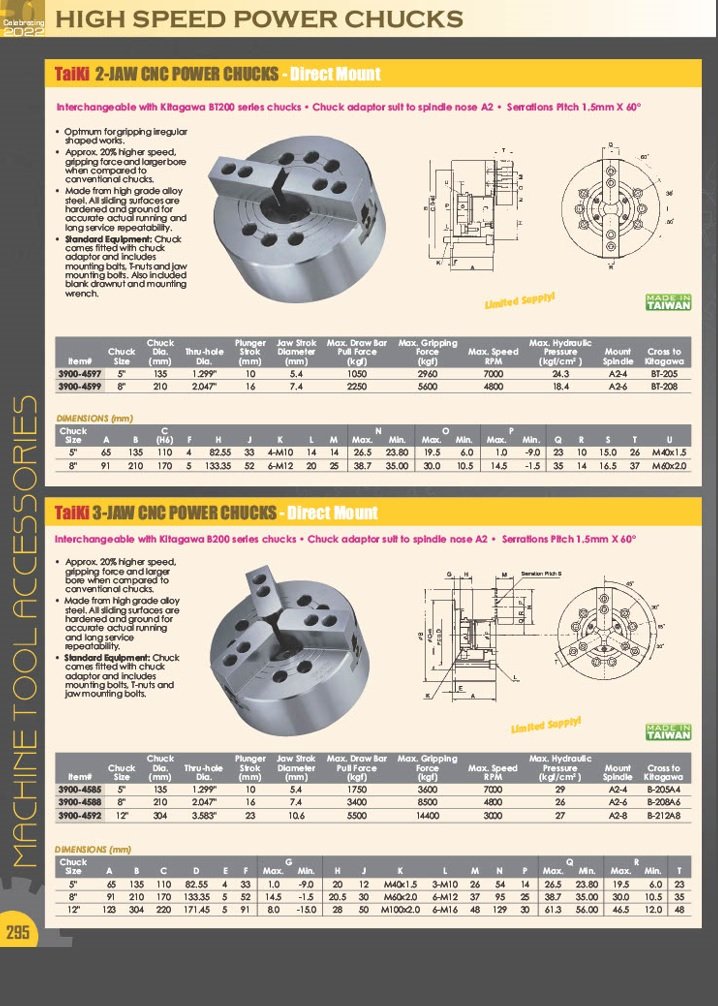
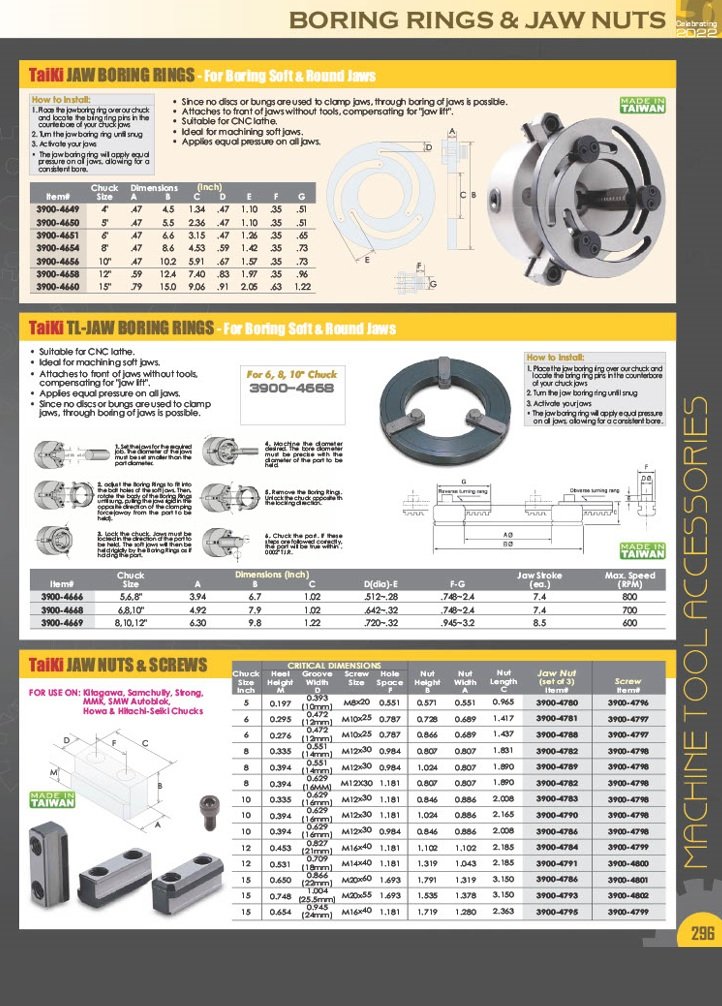
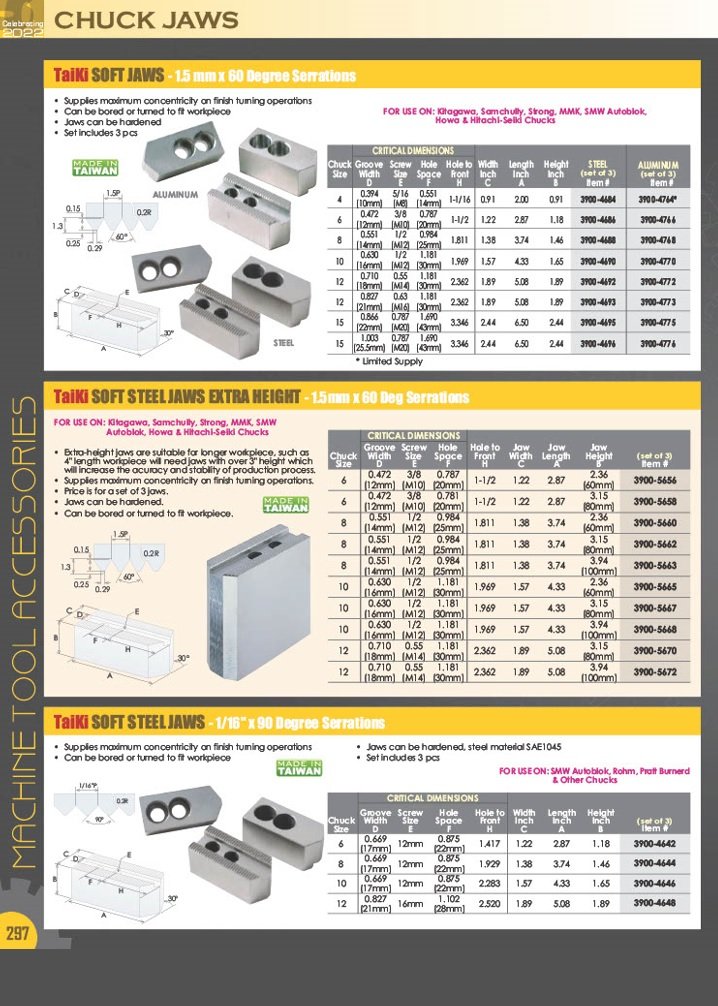
Taiki 12″ Tongue & Groove Steel Soft Jaws for Finish Turning
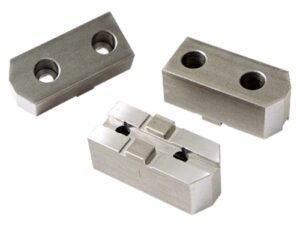
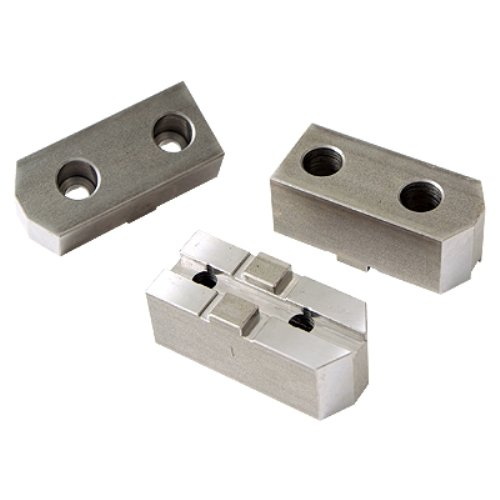
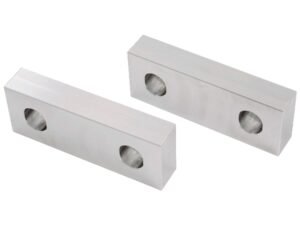
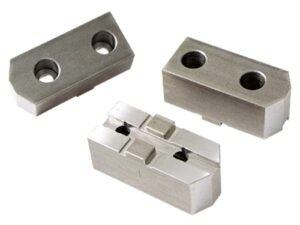
The Taiki 12-inch tongue-and-groove steel soft jaws provide machinable workholding surfaces for compatible 3-jaw lathe chucks. The jaws can be bored or turned to match a specific workpiece diameter, helping increase contact area and support concentric finish-machining setups.
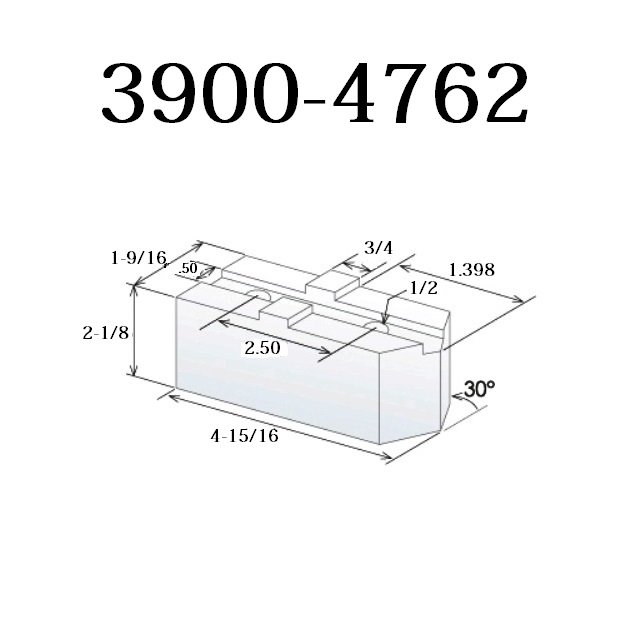
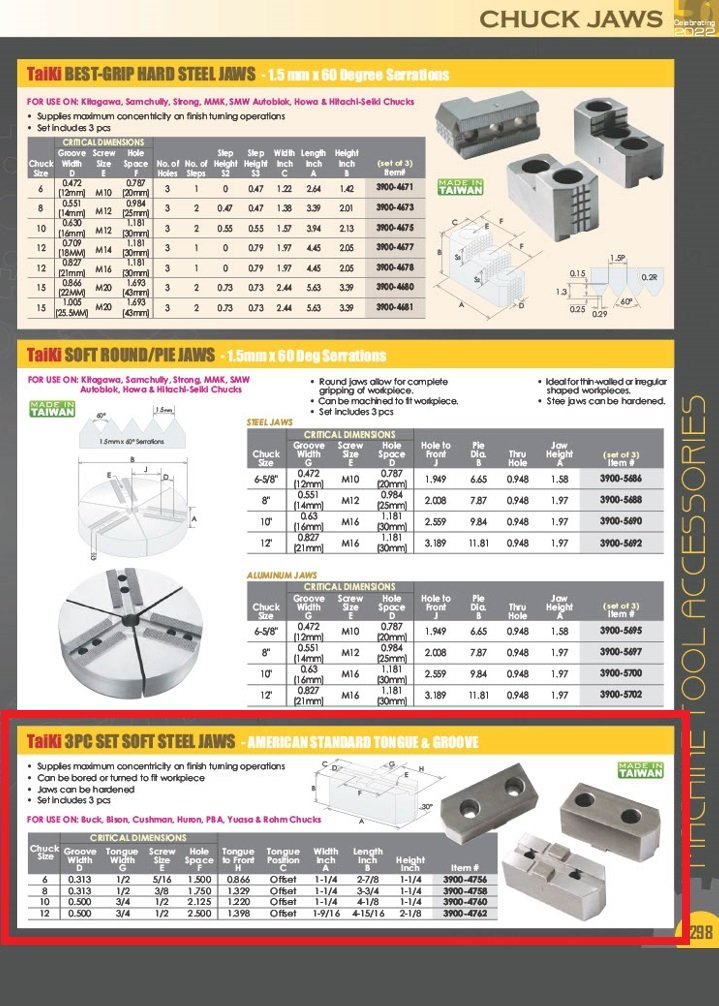
This three-piece set uses an American-style tongue-and-groove interface with a 0.500″ groove, 0.750″ tongue width, 1/2″ mounting screws and 2.50″ hole spacing.
The jaws are intended for compatible 12-inch Buck, Bison, Cushman, Huron, PBA, Yuasa and Röhm chucks. Chuck brand and nominal diameter alone are not sufficient to confirm fit—the complete mounting pattern must be checked before ordering.
Why Machine Soft Jaws to the Workpiece?
Standard hard jaws contact a workpiece at limited points. That may be acceptable for roughing, but it can create problems during finish turning, especially with thin-wall or already-machined components.
Machining the soft jaws to match the gripping diameter can provide:
- More contact between the jaws and workpiece
- Improved support during finish turning
- Reduced localized clamping pressure
- Better control of delicate or thin-wall parts
- A repeatable locating surface for batch work
- Reduced marking compared with unsuitable hard-jaw contact
- Controlled axial location when a locating step is machined
Actual concentricity depends on the chuck condition, master-jaw fit, spindle runout, boring method, clamping pressure and workpiece consistency. Soft jaws do not automatically correct wear or alignment errors elsewhere in the workholding system.
Designed for Concentric Finish-Turning Setups
These jaws can be machined while installed on the intended chuck and loaded in the same direction used during production. This allows the gripping contour to be created relative to the chuck’s operating center under a representative clamping condition.
For best results, use an appropriate boring ring, jaw-force ring or preload method while machining the jaws. The preload direction and force should reproduce the intended production setup as closely as practical.
Machinable Steel for Custom Workholding
The steel jaw blanks can be bored or turned to create a workpiece-specific gripping profile. Depending on the setup, they may be prepared for:
- External-diameter clamping
- Internal-diameter expansion gripping
- Stepped locating profiles
- Short axial stops
- Special component contours
- Repeat production of similar parts
Maintain sufficient jaw material around all mounting holes, tongue-and-groove features and load-bearing sections. Do not remove material that is required for safe jaw strength or screw engagement.
American Tongue-and-Groove Mounting Pattern
The tongue-and-groove interface locates the top jaw relative to the chuck’s master jaw. Correct fit requires more than matching the chuck diameter.
This Taiki set has the following mounting geometry:
- Groove width: 0.500″
- Tongue width: 0.750″
- Mounting screw size: 1/2″
- Mounting-hole spacing: 2.50″
- Tongue-to-front dimension: 1.398″
- Tongue position: Offset
Every dimension should be compared with an existing jaw or the chuck manufacturer’s drawing before purchase.
Offset Tongue Position
The mounting tongue is offset rather than centered. This detail is critical because two jaws with the same width, hole spacing and screw size may still be incompatible if the tongue location differs.
Measure from the specified jaw reference surface to the tongue position and compare it with the published 1.398″ tongue-to-front dimension.
Compatible Chuck Brands
The jaws are listed for use with compatible 12-inch chucks from:
- Buck
- Bison
- Cushman
- Huron
- PBA
- Yuasa
- Röhm
Brand compatibility is not universal model compatibility. Manufacturers may use different master-jaw systems, screw patterns or tongue locations across chuck series and production generations.
These jaws should not be assumed to fit serrated metric master jaws, wedge-bar power chucks or another mounting standard simply because the chuck is made by one of the listed manufacturers.
Applications in CNC Turning
CNC turning shops can machine dedicated jaw sets for repeat jobs where workpiece support and setup consistency matter.
- Finish turning rings and sleeves
- Second-operation machining
- Holding pre-machined diameters
- Batch production of flanges and collars
- Rechucking components with controlled axial location
- Supporting thin-wall parts with a larger contact area
A dedicated jaw set can also reduce setup time when the same job returns regularly. Identify and store each machined set with its workpiece number, gripping diameter and operating conditions.
Applications in Manual Lathe Workshops
Manual machine shops can use these machinable jaws for one-off repairs and low-volume components that cannot be held appropriately with standard hard jaws.
- Bearing housings and retainers
- Pump and motor components
- Large bushings and sleeves
- Repair flanges and adapter rings
- Restoration components
- Previously finished parts requiring a second operation
Automotive and Mechanical Repair
For appropriately sized components, the jaws can be machined to support automotive and industrial repair work such as:
- Hub and flange rework
- Pulley and adapter machining
- Bearing-retainer repair
- Drivetrain and coupling components
- Large collars and spacers
- Discontinued replacement parts
Safety-critical components require suitable engineering, material verification, machining procedures and dimensional inspection.
Thin-Wall and Low-Marking Workholding
A jaw profile machined close to the component diameter can distribute clamping force over a broader area. This may reduce distortion and marking compared with concentrated hard-jaw contact.
However, distortion also depends on wall thickness, material, gripping depth and applied chuck force. Use only the clamping pressure required to hold the workpiece securely during the intended cut.
Jaws Can Be Hardened
The steel jaws can be hardened after machining when the application requires greater wear resistance. Heat treatment should be performed using a controlled process appropriate for the jaw material and final geometry.
Hardening may cause dimensional movement. Critical gripping surfaces may require finish grinding or inspection after heat treatment. Once hardened, the jaws will also be more difficult to modify for another workpiece.
Technical Specifications
| Brand | Taiki |
|---|---|
| Distributor Reference | 3900-4762 |
| Product Type | Machinable tongue-and-groove soft jaws |
| Set Quantity | 3 jaws |
| Material | Steel |
| Nominal Chuck Size | 12″ |
| Jaw Interface | American-style tongue and groove |
| Groove Width | 0.500″ |
| Tongue Width | 0.750″ / 3/4″ |
| Tongue Position | Offset |
| Tongue-to-Front Dimension | 1.398″ |
| Mounting Screw Size | 1/2″ |
| Mounting-Hole Spacing | 2.50″ |
| Jaw Width | 1-9/16″ |
| Jaw Length | 4-15/16″ |
| Jaw Height | 2-1/8″ |
| Compatible Chuck Brands | Buck, Bison, Cushman, Huron, PBA, Yuasa and Röhm |
| Shipping Weight | 12 lbs |
Compatibility Checklist Before Ordering
Remove one existing top jaw and compare all of the following:
- Chuck diameter: 12″
- Three-jaw chuck configuration
- 0.500″ groove width
- 0.750″ tongue width
- Offset tongue position
- 1.398″ tongue-to-front dimension
- 1/2″ mounting screw size
- 2.50″ center-to-center hole spacing
- Available jaw clearance and overall dimensions
If any dimension differs, do not assume compatibility based only on the chuck brand.
Recommended Soft-Jaw Setup Procedure
- Clean the chuck master jaws, tongue-and-groove surfaces and mounting screws.
- Install each jaw in its correct numbered chuck position.
- Verify that the tongue seats fully without rocking or interference.
- Tighten the mounting screws according to the chuck or jaw manufacturer’s procedure.
- Apply a suitable preload in the intended clamping direction.
- Bore or turn the jaw profile close to the actual gripping diameter.
- Add a controlled locating step if the operation requires axial positioning.
- Deburr and clean all machined jaw surfaces.
- Install the workpiece and verify runout before machining.
Frequently Asked Questions
Will these jaws fit every 12″ Bison or Buck chuck?
No. They fit compatible models using the specified tongue-and-groove interface. Verify the groove, tongue, offset, screw size and hole spacing before ordering.
Are these hard jaws?
No. They are machinable steel soft jaws supplied for custom boring or turning. They may be hardened later using an appropriate heat-treatment process.
Can the jaws be used for internal and external gripping?
They can be machined for compatible internal- or external-gripping configurations, provided sufficient material and structural strength are maintained.
Do soft jaws guarantee zero runout?
No. Properly machined jaws can support a concentric setup, but final runout depends on the chuck, spindle, master jaws, preload method, machining procedure and workpiece.
Is this one jaw or a complete set?
This listing includes three steel soft jaws for a compatible 3-jaw chuck.
What does “offset tongue” mean?
It means the mounting tongue is not centered along the jaw length. Its exact location must match the master-jaw interface.
Avoid Downtime Caused by the Wrong Jaw Pattern
Matching the chuck diameter and brand is not enough. The tongue position, groove width, screw size and hole spacing determine whether the jaws will mount correctly.
Not sure they fit? Send SHOP TOOL USA a photo of the existing jaw, chuck manufacturer and model, plus the groove width, tongue width, screw size and center-to-center hole spacing. We can help compare the pattern before you order.
Reviews
There are no reviews yet.