
Protect Large, High-Value Components from Rechucking Error
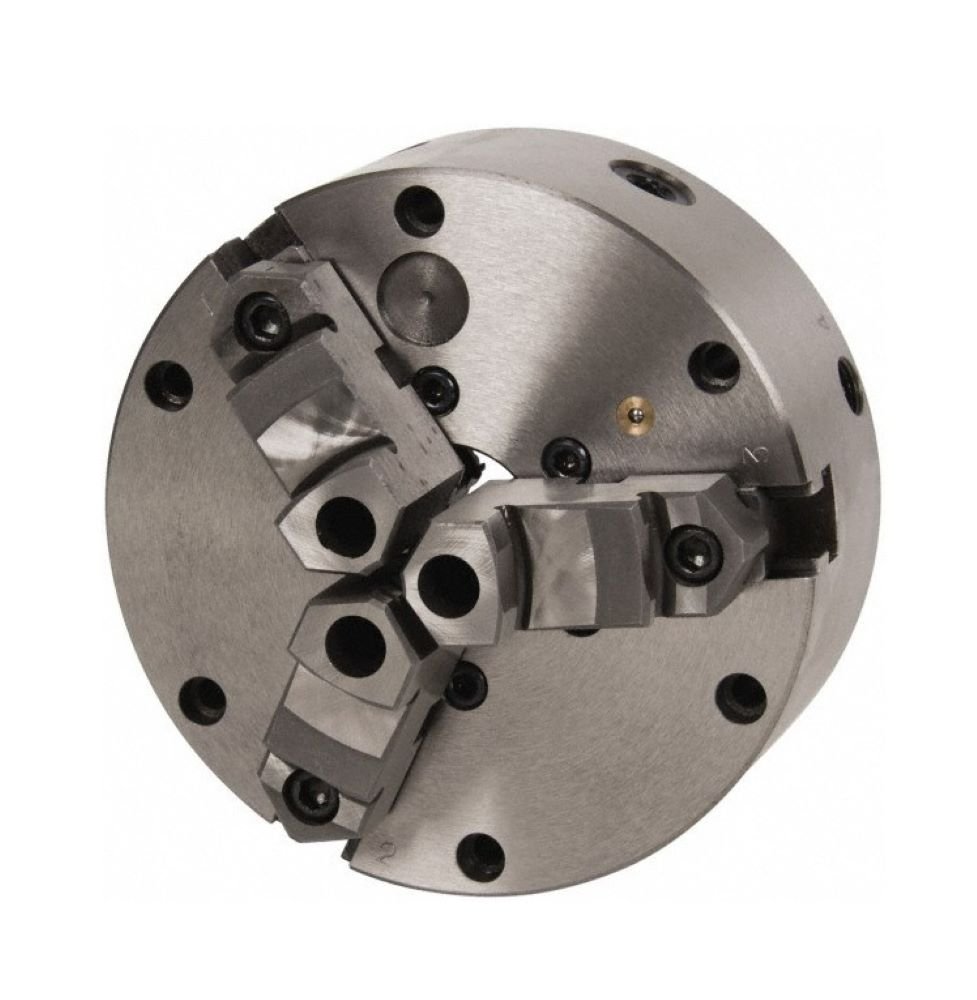
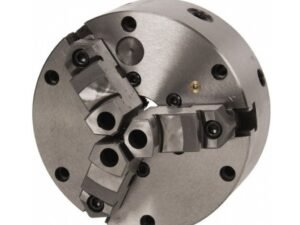
The 3900-4582 12″ Zero-Set 3-Jaw Plain Back Lathe Chuck combines high-capacity workholding with the convenience of a self-centering scroll and the fine adjustment needed to correct measured runout.
Designed for large-part turning, industrial repair and repeat production, its opposing Zero-Set screws allow the chuck body to be shifted relative to a compatible backplate or spindle adapter. The operator can clamp the component, measure an existing reference diameter and make controlled corrections before machining begins.
This is especially valuable when a shaft, flange, hub, roller or repair component already contains significant material, labor or machining value. A poor second-operation setup can make an expensive part unusable. The Zero-Set system helps identify and correct the setup before that error reaches the cutting tool.
Load large round components with three-jaw speed, indicate the actual running condition and fine-adjust the chuck instead of accepting uncontrolled rechucking error.
Why Large-Part Turning Requires More Setup Control
Runout becomes increasingly costly as the size and value of a component increase. A previously machined bore, bearing seat, outside diameter or sealing surface may need to remain concentric with a new operation performed from the opposite end of the part.
A conventional three-jaw chuck centers quickly, but scroll wear, jaw position, mounting error and variation in the gripping diameter can change the workpiece axis. Removing and reinstalling a large component may therefore introduce enough runout to produce:
- Uneven wall thickness.
- Misaligned bearing seats.
- Off-center bores or counterbores.
- Faces that do not run perpendicular to the intended axis.
- Mismatched diameters between first and second operations.
- Excessive material removal from one side of a repair part.
- Unnecessary rework or complete loss of a high-value component.
The 3900-4582 adds a fine-adjustment stage to the familiar three-jaw scroll mechanism, allowing the operator to correct the indicated position of the chuck assembly.
High-Capacity Zero-Set Workholding
- 12″ chuck diameter: Provides a substantial workholding platform for larger components.
- Three-jaw self-centering operation: All jaws move together for faster loading of suitable round and hexagonal parts.
- Opposing fine-adjustment screws: Allow measured runout to be corrected after the workpiece is clamped.
- 0.0005″ duplicate-part repeatability: Supports consistent repeat production when setup conditions are controlled.
- Two-piece reversible jaws: Provide flexibility for internal and external gripping arrangements.
- 3.252″ center through hole: Provides useful clearance through the chuck body, subject to backplate and spindle-bore limitations.
Applications in Industrial Repair and Manufacturing
This 12″ adjustable scroll chuck is a strong candidate for large manual lathes used in:
- Heavy-equipment repair and maintenance.
- Large shaft and axle restoration.
- Industrial pump and gearbox rebuilding.
- Manufacturing and repairing couplings.
- Machining large hubs, pulleys and sprocket blanks.
- Producing flanges and sealing components.
- Repairing rollers and cylindrical machine components.
- Agricultural and construction-equipment maintenance.
- Power-generation and process-equipment repair.
- Repeat production of large bushings and sleeves.
- Second-operation machining of large round components.
The exact gripping range is not included in the supplied specifications. Confirm the workpiece diameter, jaw engagement and required gripping configuration before ordering.
Zero-Set Adjustment Without Independent Jaw Setup
A four-jaw independent chuck can center a workpiece accurately, but each jaw must be adjusted separately. That level of control is useful for irregular components, although it can add considerable setup time when several similar round parts must be loaded.
The 3900-4582 retains the simultaneous movement of a three-jaw scroll. Once the workpiece is clamped, the opposing Zero-Set screws reposition the chuck body relative to its mounting adapter.
This provides:
- Faster loading of duplicate round components.
- Fine correction without independently resetting all three jaws.
- A practical method for establishing a repeat-production reference.
- Controlled alignment during large-part second operations.
Two-Piece Reversible Top Jaws
The chuck uses three two-piece jaw assemblies, not nine separate top jaws. Each assembly consists of a master jaw and a reversible upper section.
The top jaws can be arranged for different internal and external gripping requirements. This construction is designed to provide increased gripping capability with less unwanted jaw distortion.
The jaw teeth and guideways are hardened and fully ground on both sides to support consistent engagement with the scroll and controlled travel within the chuck body.
Hardened Internal Components for Repeated Shop Use
The components responsible for transferring clamping force are manufactured for industrial use:
- Drop-forged alloy-steel scroll: Provides a strong core for synchronized jaw movement.
- Case-hardened scroll plate: Improves resistance to wear at working surfaces.
- Ground scroll thread flanks: Both sides are ground for controlled jaw engagement.
- Hardened and ground jaw teeth: Designed for repeated clamping cycles.
- Fully ground guideways: Support controlled jaw movement.
- Hardened and ground pinions: Transfer chuck-key input to the scroll.
- Precisely machined bearing surfaces: Promote alignment and consistent mechanical operation.
Substantial 133 lb Workholding Assembly
The chuck has a listed shipping weight of 133 lb. This mass can provide a substantial workholding platform, but it also makes machine selection, handling and mounting critical.
Before ordering, confirm that the lathe spindle, bearings, drive system and mounting arrangement can support the chuck’s weight, diameter and overhung load. A chuck that fits within the machine swing is not automatically compatible with the spindle.
Use an appropriately rated lifting device, chuck cradle or installation fixture. Do not attempt to manually lift or install a 133 lb chuck without a safe handling plan.
3.252″ Center Through Hole
The reported 3.252″ center hole provides passage through the chuck body for suitable shafts and long workpieces. Actual bar or shaft passage depends on the smallest opening through the complete assembly:
- Chuck center hole.
- Backplate or spindle adapter.
- Lathe spindle bore.
- Internal stops or mounting components.
The center-hole dimension should not be presented as guaranteed machine bar capacity.
Understanding the 0.0005″ Repeatability Claim
The published 0.0005″ repeatability applies to duplicate parts under consistent setup conditions. It does not mean that every workpiece automatically runs within 0.0005″ after initial clamping.
Repeatability depends on:
- Consistent gripping diameter and workpiece geometry.
- Returning the jaws to the same scroll position.
- Using consistent clamping force.
- Keeping jaws and workpieces clean.
- Correct backplate machining and installation.
- Proper Zero-Set adjustment.
- Lathe spindle and bearing condition.
- Indicator resolution and holder rigidity.
- Workpiece rigidity and support.
The final machined tolerance also depends on cutting forces, tool deflection, thermal conditions and overall machine accuracy.
Recommended Dial-In Procedure
- Install the chuck on a correctly designed and machined plain-back adapter.
- Clean the mounting surfaces, jaws and workpiece reference diameter.
- Support the workpiece appropriately during loading.
- Clamp it with sufficient jaw engagement and controlled tightening force.
- Position a dial or test indicator against a qualified reference surface.
- Rotate the spindle manually and locate the high indicator reading.
- Make a small correction using the appropriate opposing adjustment screws.
- Rotate and measure the workpiece again.
- Repeat until the required running condition is reached.
- Secure the mounting system and verify runout after final tightening.
Never make Zero-Set adjustments while the spindle is powered. Remove the chuck key, adjustment tools, indicator and lifting equipment before operating the lathe.
Technical Specifications
| Product Type | High-capacity adjustable Zero-Set scroll chuck |
|---|---|
| SKU / Part Number | 3900-4582 |
| Chuck Diameter | 12″ |
| Number of Jaws | 3 |
| Jaw Construction | Two-piece with reversible top jaws |
| Mounting Style | Plain back |
| Adjustment System | Opposing Zero-Set fine-adjustment screws |
| Duplicate-Part Repeatability | 0.0005″ |
| Reported Center Through Hole | 3.252″ |
| Body Material | High-quality semi-steel cast iron |
| Scroll Material | Drop-forged fine-alloy steel |
| Scroll Treatment | Case hardened with thread flanks ground on both sides |
| Jaw Treatment | Teeth and guideways hardened and fully ground |
| Pinion Treatment | Hardened and ground |
| Included Mounting Screws | Six M12 screws |
| Shipping Weight | 133 lb |
Speed verification: Published sources for this SKU do not agree on the maximum RPM. Verify the chuck nameplate or current manufacturer documentation before commissioning. Always use the lowest safe limit established by the chuck, backplate, spindle, jaws and workpiece setup.
What Is Included?
- 12″ three-jaw Zero-Set plain-back lathe chuck
- Three two-piece jaw assemblies with reversible top jaws
- Six M12 mounting screws
Not identified as included: spindle adapter, backplate, chuck key, lifting device and indicator. Confirm included accessories before ordering.
Compatibility Requirements
Before purchasing, verify:
- Lathe manufacturer and model.
- Spindle-nose type and allowable chuck size.
- Maximum permitted spindle and overhung load.
- Backplate register, bolt circle and M12 mounting interface.
- Available swing and carriage clearance.
- Spindle bore and required shaft passage.
- Workpiece diameter, length and weight.
- Required jaw extension and gripping depth.
- Tailstock or steady-rest support requirements.
- Safe speed for the complete installed assembly.
12″ Zero-Set or 10″ Zero-Set?
Choose the 12″ model when the workpiece requires its additional chuck diameter, center-hole clearance or jaw support and the lathe is rated for its 133 lb mass.
Choose the 10″ model when its capacity is sufficient. The smaller chuck reduces spindle load, rotational inertia and handling requirements. The correct selection is normally the smallest chuck that safely supports the intended workpiece.
Three-Jaw or Six-Jaw Zero-Set?
This three-jaw model is intended for strong, efficient gripping of suitable round and hexagonal components.
A six-jaw Zero-Set chuck distributes contact around six positions and may be preferable when increased contact distribution is important. Workpiece material, wall thickness, geometry and allowable clamping pressure should determine the selection.
Frequently Asked Questions
Can the chuck be adjusted to reduce workpiece runout?
Yes. Opposing adjustment screws allow the chuck body to be repositioned relative to a compatible backplate while the workpiece is monitored with an indicator.
Are the three jaws independently adjustable?
No. The jaws move together through the scroll. The Zero-Set screws adjust the chuck body, not each jaw individually.
Does it include nine top jaws?
No. “9 piece top jaws” is a transcription error. The chuck uses three two-piece jaw assemblies with reversible top jaws.
Does this plain-back chuck mount directly to every lathe?
No. It normally requires a compatible backplate or spindle adapter machined for the specific lathe.
Can the 133 lb chuck be installed manually?
A correctly rated lifting and handling method is strongly recommended. Follow the lathe and workplace safety requirements for heavy chuck installation.
What is the maximum safe RPM?
Verify the current chuck nameplate or manufacturer documentation. The safe operating speed may be lower depending on the backplate, spindle, jaw extension, workpiece size, balance and machine condition.
Control the Setup Before Machining a Valuable Large Part
The 3900-4582 12″ Zero-Set Lathe Chuck is built for shops where large components, repair labor and machine time are too valuable to risk on an uncontrolled rechucking setup.
Request a quote for the 3900-4582 today. Send us your lathe model, spindle-nose designation, permissible chuck weight, backplate dimensions and typical workpiece size so we can help evaluate compatibility.
Request pricing and compatibility support
Compare Zero-Set Workholding Capacity
- Browse all Zero-Set 3-jaw and 6-jaw lathe chucks.
- Need lower chuck weight? Compare the 10″ Zero-Set chuck for large repeat parts.
- Working with medium-size shafts and hubs? See the 8.27″ adjustable Zero-Set chuck.
- Machining compact components? Review the 6″ Zero-Set chuck for precision second operations.
- Need six-point contact distribution? Compare the 12″ six-jaw Zero-Set chuck.
- Find mounting solutions in our lathe chuck accessories and backplate section.
- Measure setup runout with a suitable dial or test indicator.
Reviews
There are no reviews yet.