
Dial In Your Workpiece Without Giving Up 3-Jaw Chuck Speed
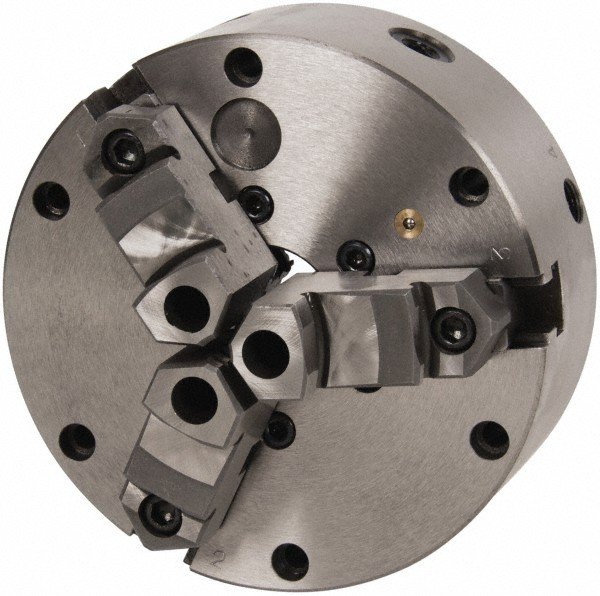
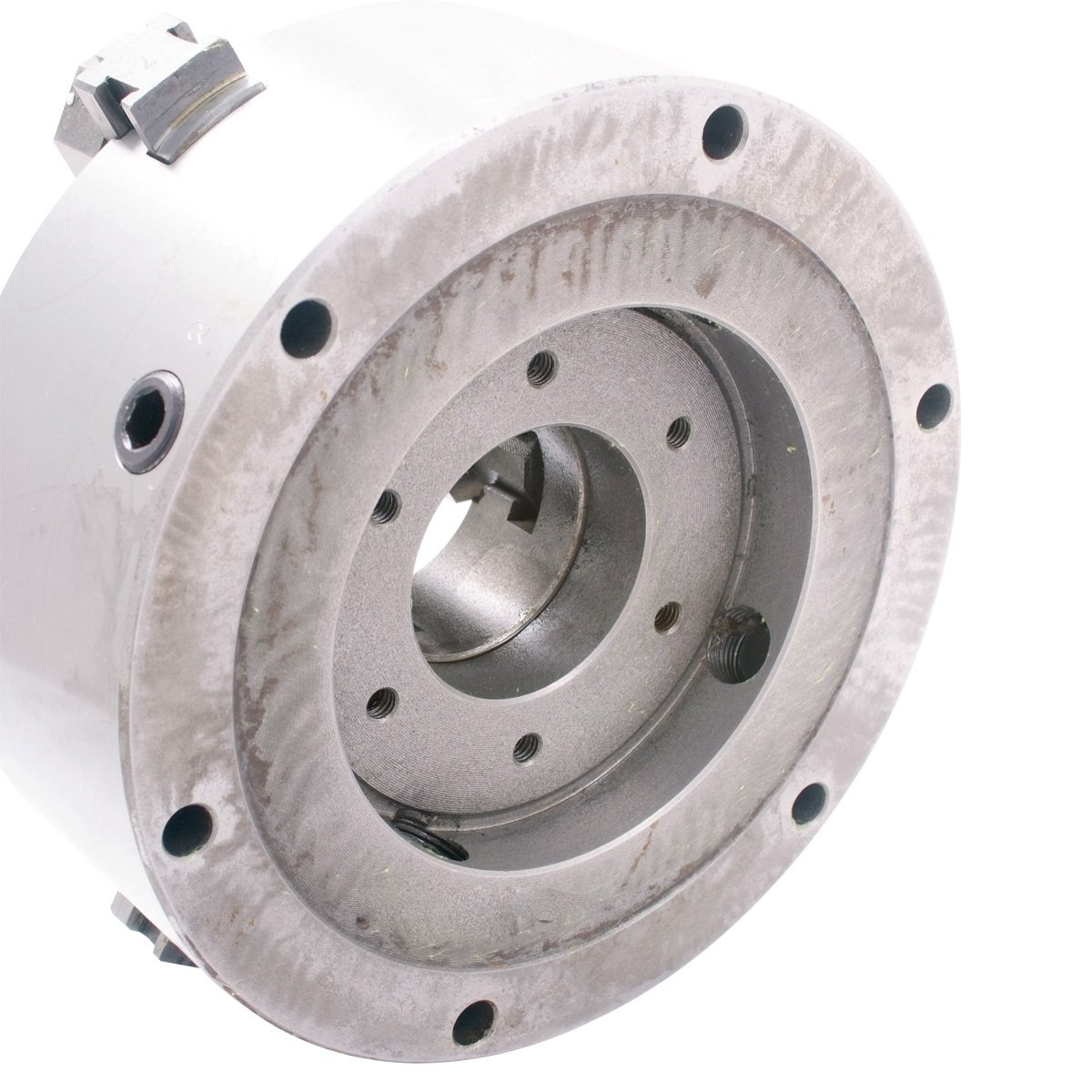
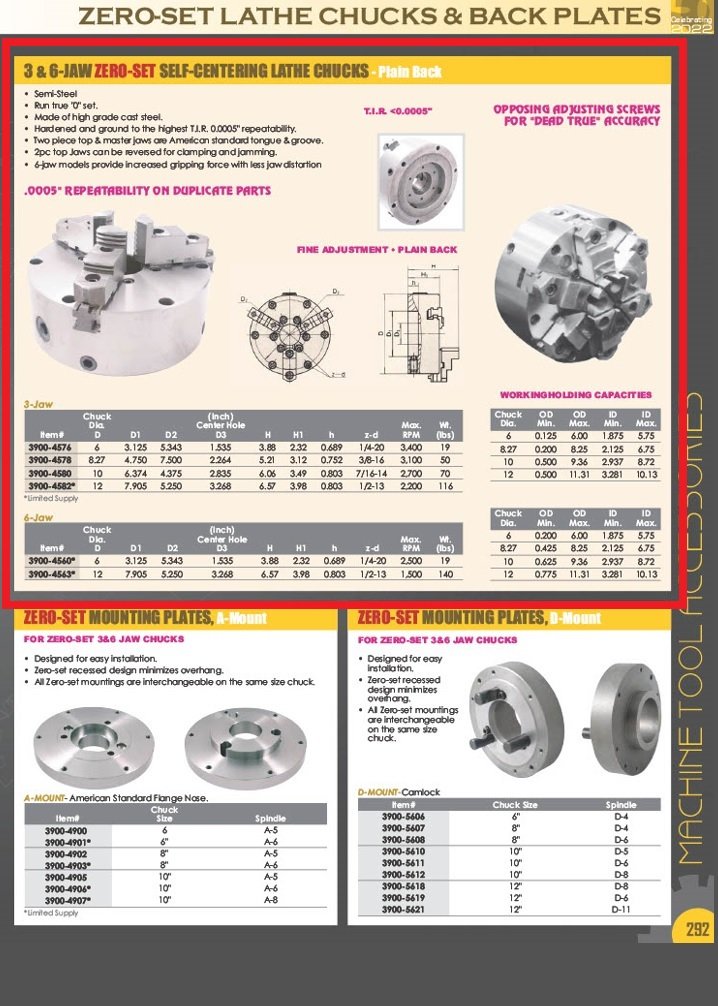
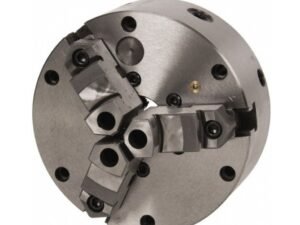
The 3900-4576 6″ Zero-Set 3-Jaw Plain Back Lathe Chuck combines the fast loading of a self-centering scroll chuck with the fine adjustment needed to reduce indicated runout on precision turning setups.
Its opposing Zero-Set adjustment screws allow the chuck position to be corrected after mounting. With a dial indicator and a compatible backplate or adapter, the machinist can make controlled adjustments until the workpiece runs closer to the required centerline.
This makes the chuck especially valuable when a conventional 3-jaw chuck loads parts quickly but does not provide enough control for duplicate-part production, second-operation turning, repair machining or concentric feature work.
Spend less time tapping parts into position and reduce the risk of losing concentricity after rechucking.
Why a Zero-Set Chuck Instead of a Standard 3-Jaw Chuck?
A conventional scroll chuck is fast and convenient, but its running accuracy is influenced by the scroll, jaws, mounting interface, wear and the diameter being gripped. If a workpiece is removed and loaded again, it may not return to exactly the same axis.
The Zero-Set system adds a second level of control. The three jaws continue to move together for fast self-centering, while the opposing adjustment screws allow the entire chuck assembly to be shifted slightly relative to its mounting adapter.
This lets the operator indicate a reference diameter and correct the chuck’s position without independently adjusting all three jaws.
- Standard 3-jaw speed: Load round and hexagonal workpieces quickly through the scroll mechanism.
- Fine runout correction: Use the opposing adjustment screws to dial in the workpiece after mounting.
- 0.0005″ duplicate-part repeatability: Supports consistent rechucking under suitable, repeatable setup conditions.
- Improved production consistency: Useful when a family of similar parts must be loaded, machined and replaced repeatedly.
Designed for Duplicate Parts and Second Operations
Second-operation turning is where chuck runout often becomes expensive. A part may have an already-machined diameter, bore, thread or shoulder that must remain concentric with the next operation. If the part is rechucked off-center, the result can be uneven wall thickness, excessive stock removal, mismatched diameters or scrapped components.
The 3900-4576 provides an adjustable workholding solution for applications such as:
- Rechucking previously machined shafts and sleeves.
- Finishing a second end while maintaining alignment with an existing diameter.
- Producing duplicate repair components in small or medium batches.
- Turning bearing seats, bushings and concentric shoulders.
- Automotive and mechanical repair involving shafts, hubs and spacers.
- Toolroom and mold-repair components requiring controlled alignment.
- Manual lathe production where quick loading and adjustable runout are both important.
- Prototype work that must be removed, inspected and returned to the lathe.
Opposing Adjustment Screws for Controlled Dial-In
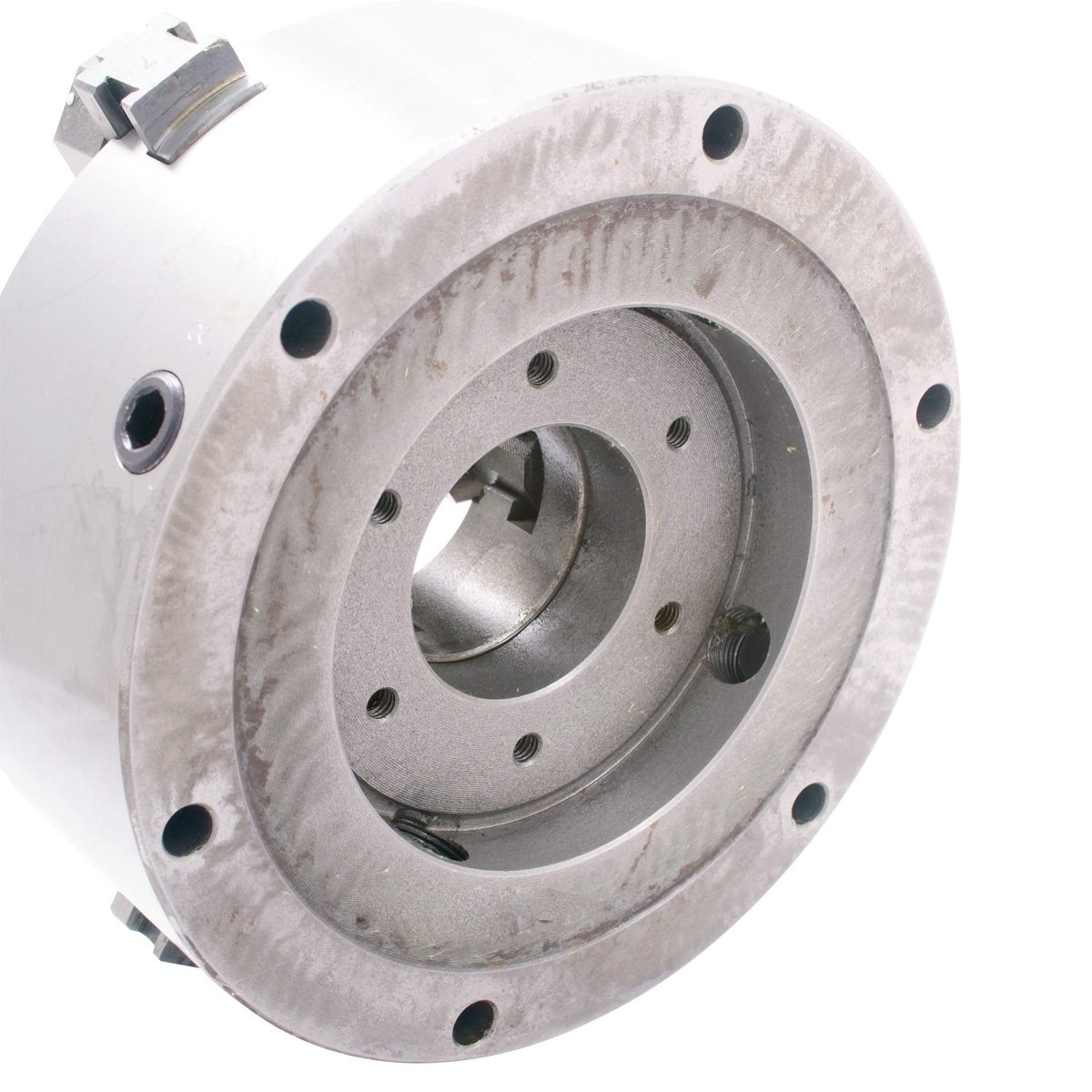
The chuck incorporates opposing fine-adjustment screws around the body. During setup, the operator measures workpiece runout with a dial or test indicator and makes small corrections through the appropriate opposing screw pair.
The adjustment process shifts the chuck relative to the mounting interface. It does not move each jaw independently. This preserves the loading convenience of a scroll chuck while adding a practical method for refining concentricity.
For best results, make small corrections, rotate the spindle manually, recheck the indicator and progressively tighten the mounting system according to proper shop practice.
Increased Grip with Reduced Top-Jaw Distortion
The six-piece top-jaw arrangement can be reversed or repositioned for different internal and external gripping requirements. This construction is designed to provide increased gripping force while reducing unwanted jaw distortion.
The hardened and fully ground jaw teeth and guideways promote consistent engagement with the chuck body. Precisely machined guideways help the jaws travel smoothly and maintain controlled contact during clamping.
Hardened and Ground Internal Components
The chuck is manufactured for sustained machine-shop use, with attention given to the components that transfer clamping force and control jaw movement:
- Semi-steel cast-iron body: Provides a rigid foundation for general precision turning applications.
- Drop-forged alloy-steel scroll: Case hardened to improve wear resistance.
- Ground scroll thread flanks: Both sides of the thread flanks are ground for controlled jaw engagement.
- Hardened and ground jaws: Jaw teeth and guideways are fully ground on both sides.
- Hardened and ground pinions: Designed for dependable transmission of clamping force.
- Precisely machined bearing surfaces: Supports smoother operation and consistent component alignment.
Understanding the 0.0005″ Repeatability Specification
The stated 0.0005″ repeatability applies to duplicate parts under appropriate and consistent workholding conditions. It should not be interpreted as a guarantee that every workpiece will automatically run within 0.0005″ immediately after installation.
Actual results depend on several factors, including:
- Condition and accuracy of the lathe spindle.
- Backplate or adapter machining and installation.
- Cleanliness of all mounting and gripping surfaces.
- Workpiece diameter, roundness and surface condition.
- Consistent jaw position and clamping torque.
- Correct Zero-Set adjustment procedure.
- Dial indicator resolution and setup rigidity.
- Chuck wear, jaw wear and scroll condition over time.
The Zero-Set mechanism gives the operator the ability to compensate for measured runout; it does not eliminate the need to inspect and adjust the setup.
How to Set the Chuck for Lower Runout
- Install the chuck on a correctly machined, compatible backplate or spindle adapter.
- Clean the jaw gripping surfaces, workpiece and mounting interfaces.
- Clamp a qualified reference diameter using consistent chuck-key pressure.
- Mount a suitable dial or test indicator on a rigid holder.
- Rotate the spindle manually and identify the highest indicator reading.
- Use the opposing Zero-Set screws to make a small correction toward center.
- Rotate and measure again, repeating the process until the required runout is reached.
- Secure the mounting system and verify the reading after final tightening.
Safety notice: Always stop and isolate the machine before making chuck adjustments. Rotate the spindle manually while indicating. Remove all chuck keys and adjustment tools before operating the lathe.
Technical Specifications
| Product Type | Zero-Set self-centering scroll chuck |
|---|---|
| SKU / Part Number | 3900-4576 |
| Nominal Chuck Diameter | 6″ |
| Number of Jaws | 3 |
| Mounting Style | Plain back |
| Adjustment Type | Opposing Zero-Set fine-adjustment screws |
| Duplicate-Part Repeatability | 0.0005″ |
| Top-Jaw Construction | Six-piece reversible arrangement |
| Body Material | High-quality semi-steel cast iron |
| Scroll Material | Drop-forged alloy steel |
| Scroll Treatment | Case hardened with thread flanks ground on both sides |
| Jaws | Hardened with teeth and guideways fully ground |
| Pinions | Hardened and ground |
| Included Mounting Screws | Six M8 screws |
| Shipping Weight | 16.7 lb |
What Is Included?
- 6″ three-jaw Zero-Set plain-back lathe chuck
- Six reversible top-jaw pieces
- Six M8 mounting screws
Important: A spindle adapter or backplate is not identified as included. Because this is a plain-back chuck, verify your lathe spindle type, adapter dimensions, register geometry, bolt pattern and available machine clearance before ordering.
Zero-Set Chuck or Four-Jaw Independent Chuck?
Select this Zero-Set three-jaw chuck when you primarily machine round or hexagonal components and want fast, simultaneous jaw movement with adjustable runout correction.
A four-jaw independent chuck is generally the better choice when each jaw must be positioned separately, when holding irregular parts or when intentionally offsetting a workpiece. It can provide extensive centering control, but usually requires more setup time for every new part.
Zero-Set Chuck or Standard Three-Jaw Chuck?
A standard three-jaw chuck is a practical and economical choice for general turning where ordinary scroll-chuck concentricity is acceptable. Choose this 3900-4576 Zero-Set model when the ability to indicate and correct the setup can reduce rework, scrap or time spent manually repositioning precision parts.
Frequently Asked Questions
Can this three-jaw chuck be adjusted for lower runout?
Yes. Opposing adjustment screws allow the chuck position to be fine-tuned relative to its mounting adapter while monitoring the workpiece with an indicator.
Does 0.0005″ repeatability mean every part automatically runs within 0.0005″?
No. The specification describes repeatability on duplicate parts under consistent setup conditions. Installation, adjustment, workpiece condition, clamping technique and machine accuracy all affect the measured result.
Is this an independent-jaw chuck?
No. The three jaws are moved together by a scroll. The Zero-Set screws adjust the chuck’s mounted position; they do not independently move the individual jaws.
Does a plain-back chuck mount directly to every lathe?
No. A plain-back chuck normally requires a compatible backplate or spindle adapter. Verify the spindle nose and mounting interface before ordering.
Can the jaws be reversed?
Yes. The six-piece top-jaw arrangement is designed to provide different gripping configurations for internal and external workholding requirements.
Is this a soft-jaw chuck?
The supplied top jaws are described as hardened and ground. Soft jaws are not listed as included. Confirm jaw-interface compatibility before purchasing replacement or machinable jaws.
Reduce Rechucking Error Before It Becomes Scrap
If your shop regularly indicates parts by tapping them inside a conventional scroll chuck, the 3900-4576 adjustable Zero-Set chuck offers a more controlled solution. It provides the speed of three-jaw self-centering workholding with the fine adjustment needed for demanding second operations and repeat-part turning.
Request availability or add the 3900-4576 to your quote today. Send us your lathe make, model, spindle-nose type and current backplate information if you need help evaluating mounting compatibility.
Request a compatibility and availability quote
Compare the Right Lathe Chuck for Your Application
- View all Zero-Set 3-jaw and 6-jaw lathe chucks for adjustable precision workholding.
- Need more diameter capacity? Compare the 8.27″ three-jaw Zero-Set chuck for larger workpieces.
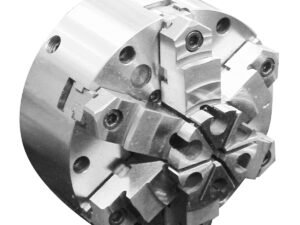
- Need greater contact around the workpiece? Review the 8″ six-jaw Zero-Set chuck.
- For general turning without Zero-Set adjustment, compare the 6″ standard self-centering plain-back chuck.
- Browse lathe chuck accessories and mounting components before selecting an adapter.
- Use a suitable instrument from our dial and test indicator collection to measure runout during Zero-Set adjustment.
Reviews
There are no reviews yet.