
More Workpiece Capacity with Adjustable Run-True Precision
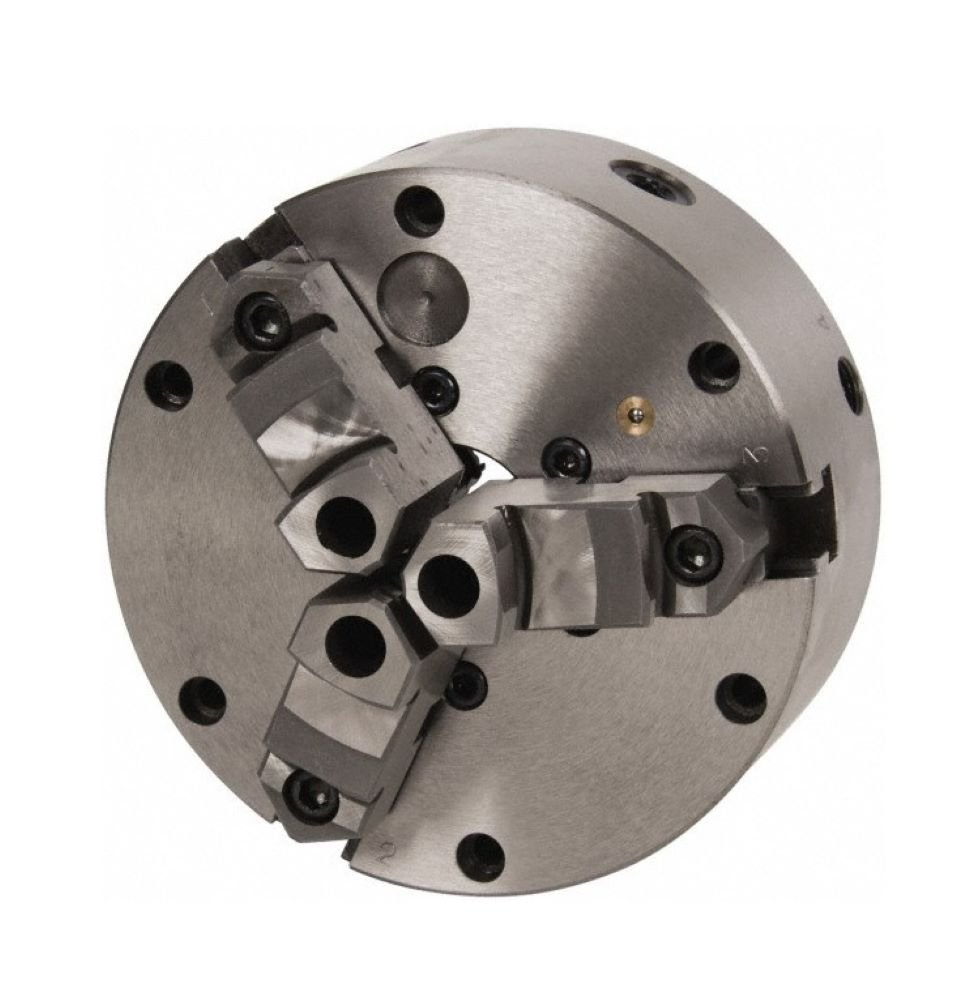
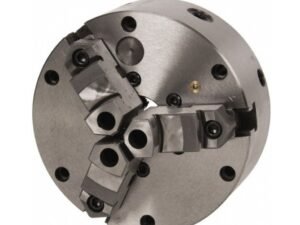
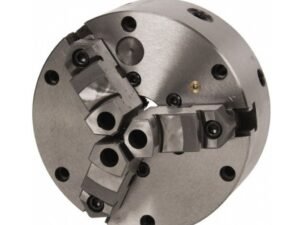
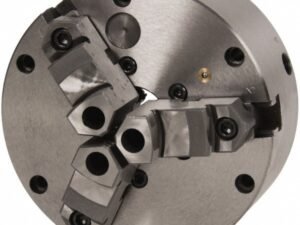
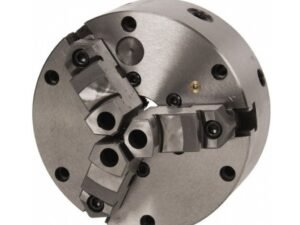
The 3900-4578 8.27″ Zero-Set 3-Jaw Plain Back Lathe Chuck is built for machine shops that need to hold larger components without giving up the speed of a self-centering scroll chuck or the ability to correct measured runout.
Its opposing fine-adjustment screws allow the chuck position to be dialed in relative to a compatible backplate or spindle adapter. This provides a controlled way to reduce indicated runout when machining repeat parts, rechucking an existing component or performing concentric second operations.
With a 2.257″ center hole, 3,100 maximum RPM and 0.0005″ repeatability on duplicate parts, this medium-capacity Zero-Set chuck is a practical choice for production turning, industrial maintenance and repair work involving shafts, bushings, hubs, flanges and similar round components.
Load parts with three-jaw speed, measure the actual setup and fine-adjust the chuck before the first cut.
Why This 8.27″ Zero-Set Chuck Is Different
A standard three-jaw scroll chuck centers parts quickly, but it does not normally allow the operator to correct the position of the entire chuck after mounting. Scroll wear, jaw position, mounting error and workpiece variation can all contribute to runout.
The 3900-4578 adds an opposing-screw adjustment system around the chuck body. With a dial or test indicator contacting a qualified workpiece diameter, the operator can identify the high point and make controlled corrections until the setup reaches the required condition.
- Three-jaw self-centering operation: All jaws move together for quick loading of round and hexagonal components.
- Zero-Set fine adjustment: Opposing screws allow the chuck assembly to be shifted relative to its mounting interface.
- 8.27″ outside diameter: Provides a larger workholding platform than the compact 6″ model.
- 0.0005″ repeatability: Designed to repeat duplicate parts under properly controlled setup conditions.
- Two-piece reversible jaws: Expands workholding flexibility for internal and external gripping arrangements.
A Practical Mid-Size Choice for Production and Repair
A 6″ chuck may be too small for larger hubs, bushings and repair components, while a 10″ or 12″ chuck can add unnecessary spindle load, size and setup weight. The 8.27″ body places this model between those two extremes.
It is particularly useful for:
- Medium-diameter shafts and shaft-repair operations.
- Bearing housings, bushings and sleeves.
- Automotive and agricultural hubs.
- Industrial flanges and coupling components.
- Repair parts that must remain concentric with an existing bore or diameter.
- Repeat batches where workpieces share the same gripping diameter.
- Second-operation turning after a part has been removed from its original setup.
- Toolroom, prototype and maintenance machining.
The larger chuck diameter does not define the exact gripping range. Confirm the workpiece diameter, jaw arrangement and required engagement before ordering.
Reduce Costly Rechucking Error
Rechucking an already-machined part can introduce eccentricity between the first and second operations. That error can cause mismatched diameters, uneven wall thickness, an off-center bore or excessive material removal from one side of the workpiece.
The Zero-Set system helps the machinist correct this condition before machining begins. Rather than repeatedly loosening the jaws and tapping the component into position, the operator can use the opposing adjustment screws to move the chuck assembly through small, controlled corrections.
This can be particularly valuable when:
- The existing machined diameter must serve as the setup reference.
- A bore and outside diameter must remain concentric.
- Several matching repair parts must be produced.
- A duplicate component must return close to the established machine axis.
- Inspection after machining would otherwise reveal avoidable runout.
Two-Piece Reversible Top Jaws
The chuck uses a two-piece jaw construction. Each jaw assembly consists of a master jaw and a removable or reversible top-jaw section, providing more setup flexibility than a one-piece solid-jaw configuration.
The top jaws can be reversed for different internal or external gripping requirements. Their construction is designed to increase gripping capability while limiting unnecessary jaw distortion.
The jaw teeth and guideways are hardened and fully ground on both sides. This supports accurate jaw movement and consistent engagement with the chuck body during repeated clamping cycles.
Hardened Scroll, Jaws and Pinions
The internal components responsible for jaw movement and clamping force are manufactured for sustained shop use:
- Drop-forged alloy-steel scroll plate: Provides a strong foundation for simultaneous jaw movement.
- Case-hardened scroll: Improves resistance to wear at the working surfaces.
- Ground thread flanks: Both sides of the scroll thread flanks are ground.
- Hardened jaw teeth: Designed for repeated engagement with the scroll.
- Fully ground jaw guideways: Supports controlled jaw travel.
- Hardened and ground pinions: Transfer chuck-key input to the scroll mechanism.
- Precisely machined bearing surfaces: Promote smoother operation and alignment of moving components.
Semi-Steel Body for Shop Rigidity
The chuck body is manufactured from high-quality semi-steel cast iron. Its substantial construction provides a rigid workholding platform for general production, repair and toolroom turning.
At a shipping weight of 45 lb, this chuck requires appropriate lifting and installation practices. The buyer should confirm that the lathe spindle, adapter and drive system can safely support the chuck’s mass, diameter and intended operating speed.
Understanding 0.0005″ Duplicate-Part Repeatability
The published 0.0005″ repeatability specification applies to duplicate parts under properly controlled conditions. It is not a claim that every workpiece will automatically run within 0.0005″ immediately after being clamped.
Repeatability depends on:
- Using workpieces with consistent gripping diameters.
- Returning the jaws to the same position on the scroll.
- Applying consistent clamping force.
- Keeping the jaws and workpiece surfaces clean.
- Correctly machining and installing the backplate or adapter.
- Maintaining the Zero-Set adjustment after it has been established.
- Condition of the lathe spindle and bearings.
- Correct indicator placement and setup rigidity.
Final dimensional accuracy will also depend on machine condition, tool deflection, cutting parameters, workpiece rigidity and thermal conditions.
How the Zero-Set Adjustment Works
- Install the chuck on a correctly fitted plain-back adapter or backplate.
- Clamp a qualified reference diameter in the jaws.
- Position a dial or test indicator on a rigid magnetic base or holder.
- Rotate the spindle manually to locate the high indicator reading.
- Loosen and tighten the appropriate opposing adjustment screws in small increments.
- Rotate the spindle and measure the workpiece again.
- Continue adjusting until the required running condition is reached.
- Secure the mounting system and verify runout after final tightening.
The adjustment screws position the chuck body relative to the adapter. They do not operate the jaws independently.
Technical Specifications
| Product Type | Adjustable Zero-Set self-centering scroll chuck |
|---|---|
| SKU / Part Number | 3900-4578 |
| Chuck Diameter | 8.27″ |
| Number of Jaws | 3 |
| Jaw Construction | Two-piece with reversible top jaws |
| Mounting Style | Plain back |
| Adjustment System | Opposing Zero-Set fine-adjustment screws |
| Duplicate-Part Repeatability | 0.0005″ |
| Center Through Hole | 2.257″ |
| Maximum Speed | 3,100 RPM |
| Body Material | High-quality semi-steel cast iron |
| Scroll Material | Drop-forged alloy steel |
| Scroll Treatment | Case hardened with thread flanks ground on both sides |
| Jaw Treatment | Teeth and guideways hardened and fully ground |
| Pinion Treatment | Hardened and ground |
| Included Mounting Screws | Six M10 screws |
| Shipping Weight | 45 lb |
What Is Included?
- 8.27″ three-jaw Zero-Set plain-back lathe chuck
- Three two-piece jaw assemblies with reversible top jaws
- Six M10 mounting screws
Backplate notice: A backplate or spindle adapter is not identified as included. This plain-back chuck must be matched to a correctly designed adapter for the specific lathe spindle.
Compatibility Checks Before Ordering
Before purchasing, confirm:
- Lathe spindle-nose type and adapter availability.
- Backplate register, bolt pattern and mounting thickness.
- Compatibility with the six supplied M10 mounting screws.
- Available swing and clearance around the chuck body.
- Machine capacity for a 45 lb chuck.
- Required center-hole clearance.
- Maximum safe spindle speed for the complete installed assembly.
- Workpiece diameter and required jaw engagement.
The published 3,100 RPM rating is a maximum chuck specification, not an instruction to operate every workpiece at that speed. The safe operating speed may be lower depending on the workpiece, jaw extension, adapter, balance, machine condition and setup.
8.27″ Zero-Set or 6″ Zero-Set?
Choose the 8.27″ model when the workpiece or required jaw contact exceeds the practical range of a compact 6″ chuck, or when a larger and more substantial workholding platform is preferred.
Choose the 6″ model for smaller components, reduced spindle load and compact second-operation work. Always select the smallest chuck that safely provides the required capacity and jaw engagement.
Three Jaws or Six Jaws?
This three-jaw model is well suited to general round and hexagonal components where strong gripping and fast loading are priorities.
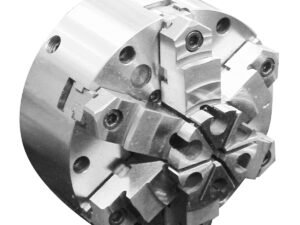
A six-jaw Zero-Set chuck distributes contact around more points of the workpiece and may be preferable for applications where increased contact distribution is important. Workpiece geometry, wall thickness and clamping requirements should determine the selection.
Frequently Asked Questions
Can this chuck be adjusted to reduce runout?
Yes. Opposing Zero-Set screws allow the chuck body to be shifted relative to a compatible backplate while the workpiece is monitored with an indicator.
Do the three jaws move independently?
No. The jaws move together through the scroll mechanism. The adjustment screws reposition the chuck assembly; they do not independently center each jaw.
Are the jaws one-piece or two-piece?
The chuck uses two-piece jaw assemblies with reversible top jaws. Some copied product listings incorrectly display “7 piece top jaws,” which is a transcription error.
Does it mount directly to my lathe spindle?
Not necessarily. This is a plain-back chuck and normally requires a compatible backplate or spindle adapter. Verify the mounting interface before ordering.
Is a chuck key included?
A chuck key is not identified in the supplied product details. Confirm included accessories before ordering if a specific key is required.
Does 0.0005″ repeatability equal guaranteed part accuracy?
No. It describes duplicate-part workholding repeatability under controlled conditions. Finished-part accuracy depends on the complete machine, setup, tooling and process.
Gain Capacity Without Losing Fine Adjustment
The 3900-4578 8.27″ Zero-Set Lathe Chuck gives production machinists and repair shops a valuable middle ground: more workholding capacity than the compact 6″ model, faster loading than an independent chuck and a practical method for correcting indicated runout.
Add the 3900-4578 to your quote today. For mounting assistance, send us your lathe manufacturer, model, spindle-nose type, existing backplate dimensions and typical workpiece diameter.
Request price, availability and compatibility support
Compare Zero-Set Lathe Chuck Sizes
- Browse all adjustable Zero-Set 3-jaw and 6-jaw lathe chucks.
- Machining smaller components? Compare the compact 6″ Zero-Set chuck for precision second operations.
- Need more capacity? Review the 10″ Zero-Set 3-jaw chuck for larger workpieces.
- Prefer greater contact distribution? See the 8″ six-jaw Zero-Set lathe chuck.
- Find mounting components in our lathe chuck accessories and adapters section.
- Measure runout during setup with a suitable dial or test indicator.
Reviews
There are no reviews yet.